In this guide
A 28kWh solar battery is a high-capacity home storage option — well above the 10–13.5kWh that suits an average Perth household. It’s a genuine fit for some homes and genuine overkill for others, and the difference usually comes down to actual measured usage, not what a package deal happens to bundle together.
What 28kWh Actually Gives You
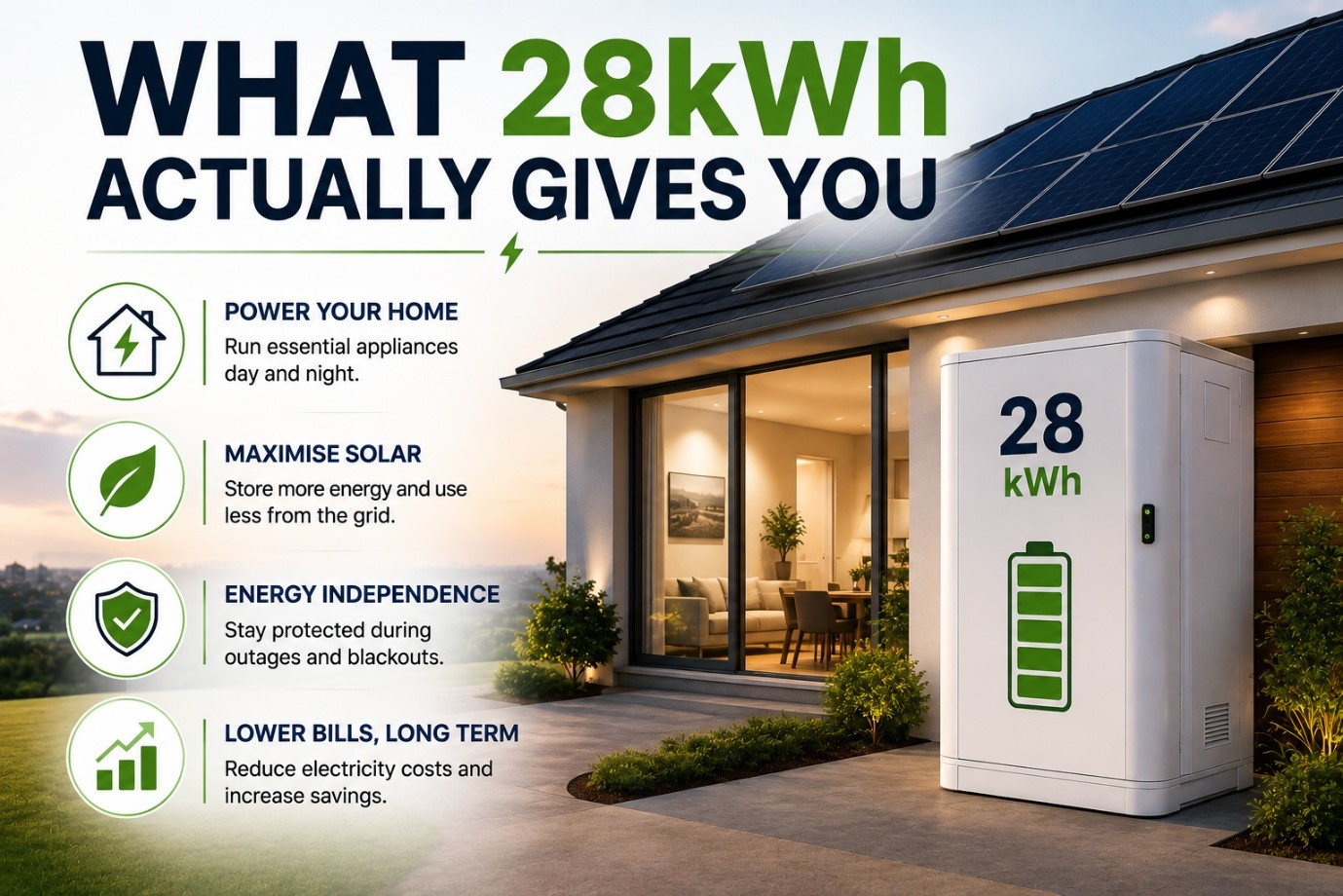
Think of it as roughly 2–2.5 days of typical household backup for a home using 12–15kWh a day, or a full day of heavy usage — ducted air conditioning, an electric oven, a pool pump, and evening EV charging all running without drawing from the grid. It’s the size where a household stops rationing battery use and starts running normally on stored solar through the evening and overnight.
In practical terms: a 28kWh battery can typically power a home through an entire evening peak-price window, overnight, and into the next morning before solar starts recharging it again — assuming the solar array behind it is sized to match (more on that below).
Who Actually Needs This Size
Good fit
5+ person households, homes with ducted air conditioning or a pool pump, anyone planning EV charging at home, or households that have measured 20kWh+ of average daily grid usage.
Worth modelling first
3–4 person households with moderate usage but strong future plans (EV, home additions, elderly parents moving in) — a 28kWh system can make sense as a deliberate buy-once decision, but it’s worth confirming against actual bills rather than assuming.
Likely oversized
2–3 person households using under 15kWh a day. A battery this size will rarely fully cycle, which means paying for capacity that mostly sits idle — a 10–15kWh system usually returns better value per dollar here.
The Rebate Sweet Spot Most Guides Miss
This is the detail that makes 28kWh a genuinely smart number, not just a convenient package size. The federal battery rebate is tiered by capacity, and 28kWh lands exactly on the boundary between the second and third tiers:
Which Brands Offer a 28kWh System
| Brand | Single-stack range | Fit for 28kWh |
|---|---|---|
| Sigenergy SigenStor | 5–48kWh per stack | Comfortable mid-stack |
| Fox ESS EQ4800 | ~10–40kWh+ | Comfortable mid-stack |
| Growatt APX | 5–30kWh | Near top of range |
| Alpha ESS SMILE M5 | 5–30kWh | Near top of range |
| Sungrow SBR | 6.4–25.6kWh | Just under — check exact model |
All four lead brands scale in modular steps, which is exactly why 28kWh works cleanly as a target — it’s not a special SKU, it’s a normal stopping point on the way to each brand’s larger configurations. For the full breakdown of footprint, efficiency and warranty terms across these and four more brands, see our complete battery brand comparison.
Not sure if 28kWh is right, or just what’s on the package?
We’ll model it against your actual bills and usage pattern before recommending a size.
Get a battery sizing assessmentSolar Array Sizing for a 28kWh Battery
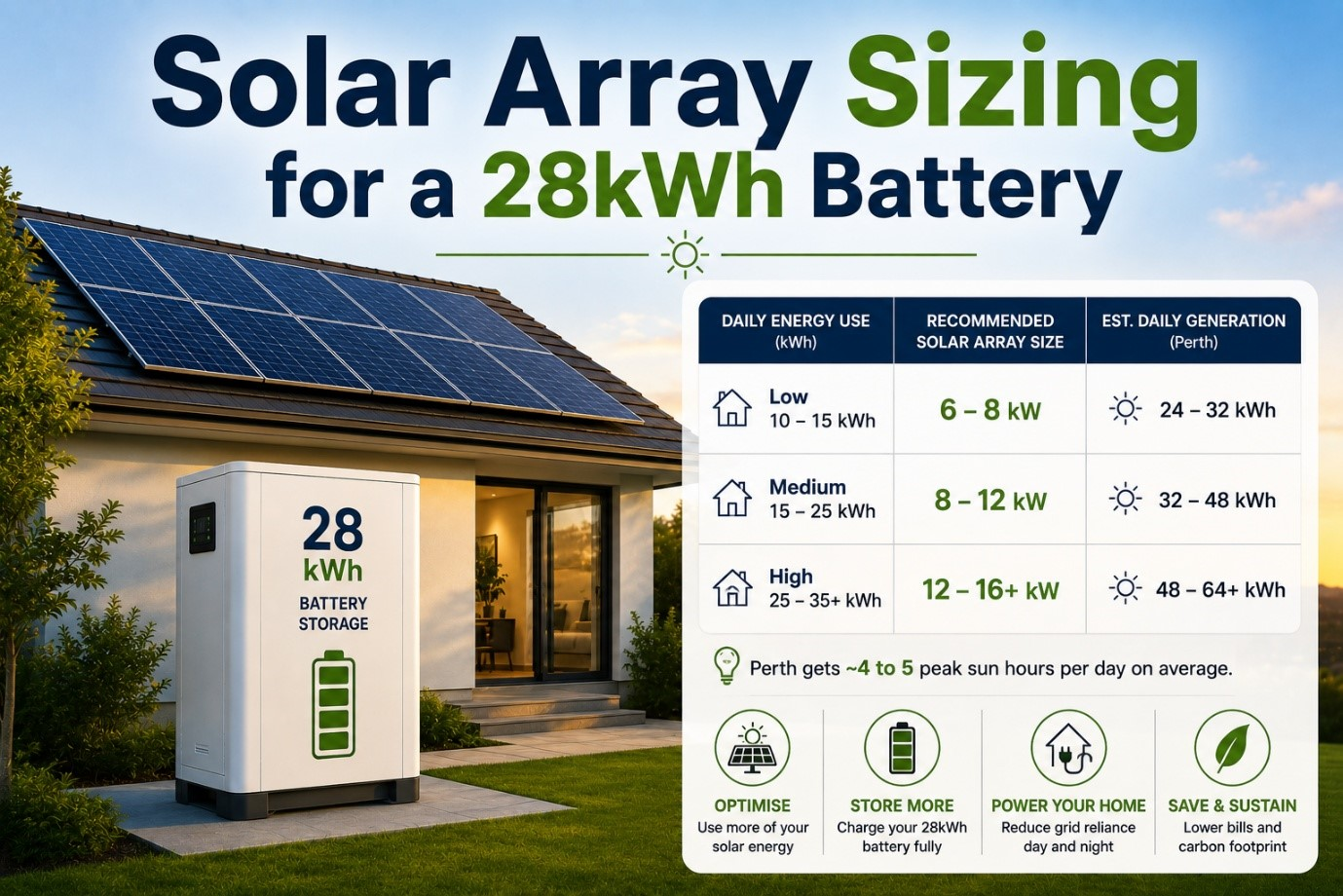
A 28kWh battery behind an undersized array will rarely fill, especially through Perth’s shorter winter days. As a starting point, installers commonly size solar at roughly 1.3–2 times the battery’s usable capacity in kW — for 28kWh, that generally means 10kW to 15kW of solar, adjusted for roof orientation, shading and how much of the array faces the afternoon sun.
Space and Compliance
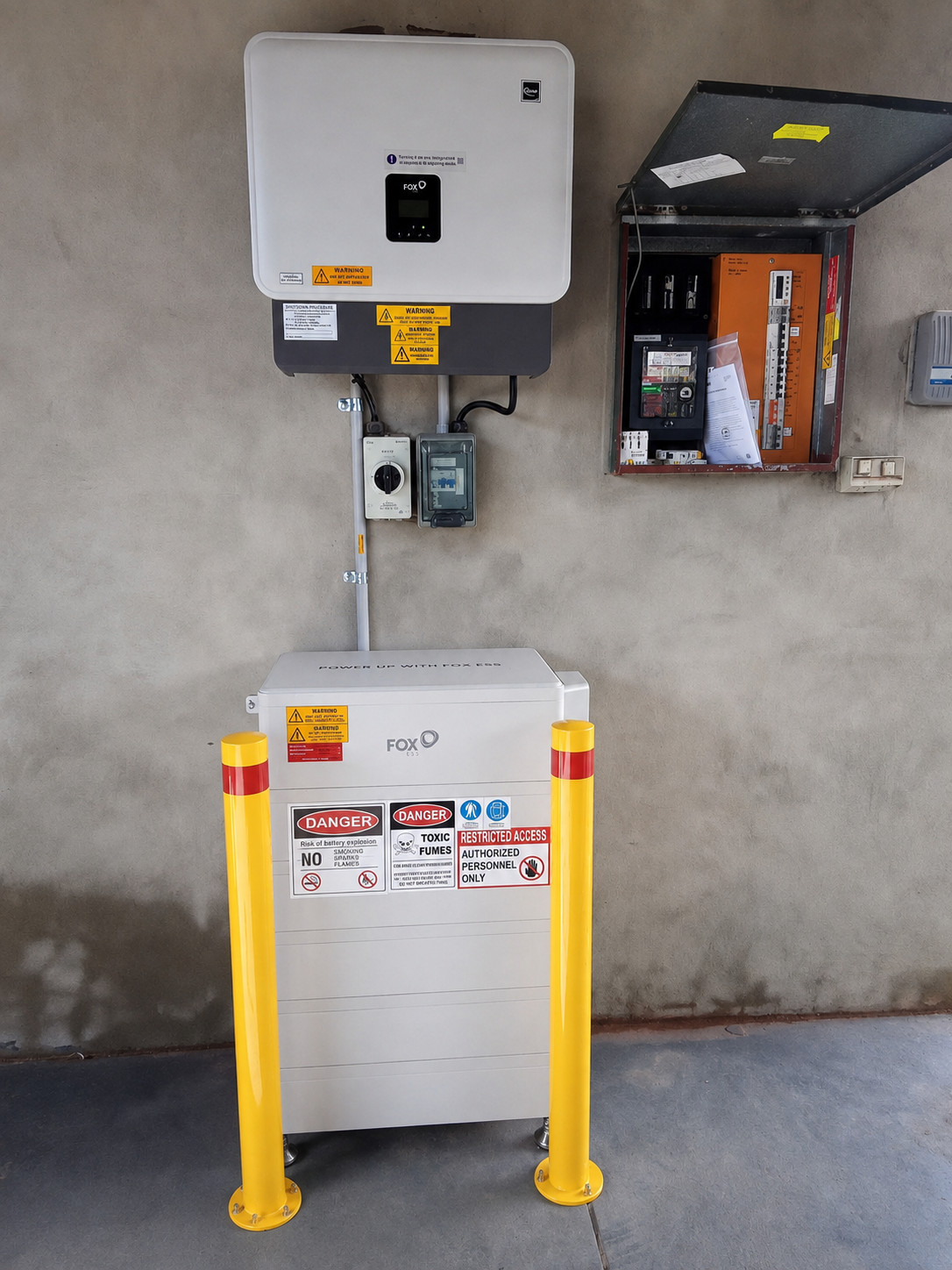
A battery this size is usually built from multiple stacked modules, so floor footprint and clearance matter more than with a compact single-unit system. Under AS/NZS 5139, expect a minimum 600mm clearance from windows and doorways, a fire barrier if the unit sits within 300mm of a wall backing onto a habitable room, and 1m clearance from gas relief vents. A larger multi-module stack also needs more vertical or floor space than a small single-box battery — worth confirming before you commit to a specific brand’s form factor. Our battery brand comparison covers exact module footprints if you’re weighing up compactness against capacity.
Frequently Asked Questions
- How many people is a 28kWh battery suited to?
- A 28kWh battery generally suits larger households — commonly 5+ people, homes with ducted air conditioning, a pool pump, or plans for EV charging. It’s oversized for a typical 2–3 person home with moderate evening usage, where a 10–15kWh battery usually fits better.
- Why does 28kWh matter for the federal battery rebate?
- 28kWh sits exactly on the boundary of the federal rebate’s tiering structure. The first 14kWh gets 100% of the rebate rate, the next 14kWh (up to 28kWh) gets 60%, and everything from 28kWh to 50kWh only gets 15%. A 28kWh battery captures the full value of the 100% and 60% tiers without spilling into the low-value 15% tier — going bigger adds capacity at a much lower rebate return per kWh.
- Which battery brands offer a 28kWh system?
- Sigenergy SigenStor, Fox ESS EQ4800, Growatt APX and Alpha ESS SMILE M5 can all be configured close to or at 28kWh within a single stack, since they scale in modular steps. Sungrow SBR tops out just under 28kWh in its standard configuration.
- How much solar do I need to charge a 28kWh battery?
- Installers commonly size solar at roughly 1.3–2 times the battery’s usable capacity in kW, adjusted for roof orientation and shading. A 28kWh battery generally wants at least a 10kW to 15kW solar array behind it to reliably fill it, particularly through Perth’s shorter winter days.
- Is a 28kWh battery worth it if I only use 20kWh a day?
- Usually not on its own. A battery that’s rarely fully cycled returns less value per dollar spent than a smaller one that’s used close to its full capacity most days. It’s the right size where usage genuinely reaches into that range, or where backup capacity and future EV charging are deliberately factored in.