
In this guide
Western Australia’s battery market looks different in 2026. Feed-in payments have softened, rooftop exports face closer control, and Perth households now place greater value on using their own solar after sunset. The best solar batteries in Perth must do more than store surplus power. They need to cope with heat, work with local network settings, deliver useful backup output, and come with service support that still matters years after installation.
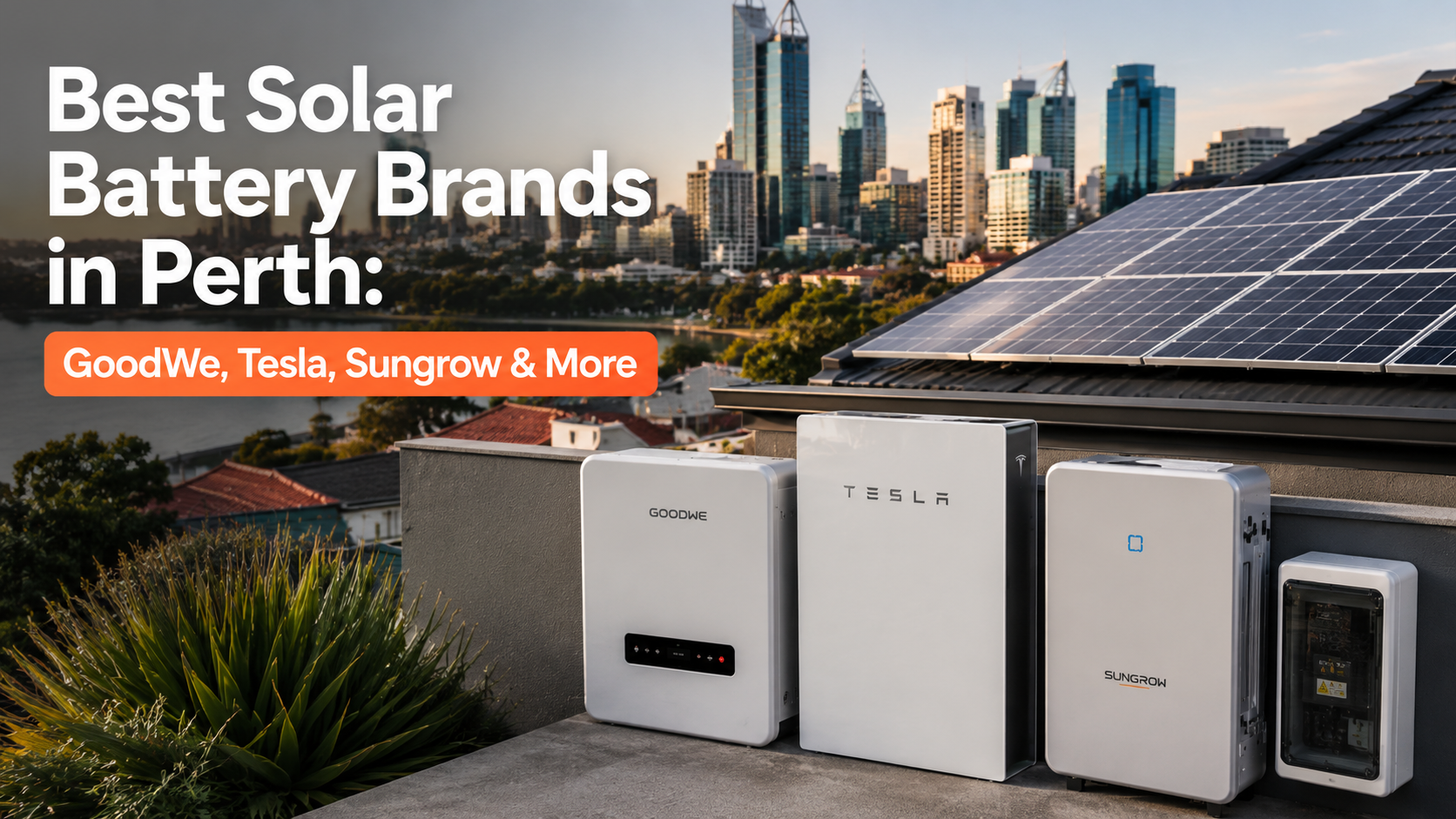
Start With the House, Not the Brand
Battery shopping often begins with a logo. Good design starts somewhere else. A common Perth system now uses fourteen 475W Tier-1 panels, creating a 6.6kW array behind a 5kW inverter — average panel wattage has moved up from the 440W panels that were standard a couple of years ago, so fewer panels now reach the same system size. On clear days, the inverter may clip a little midday production. That is not automatically a fault — the larger DC array usually produces better output through the morning, afternoon and cooler months.
Heat changes the picture. Panel output falls as cell temperature rises, while batteries may reduce charge or discharge rates in exposed locations. Solar batteries for residential homes in Perth should be selected from measured evening demand, available solar surplus and future appliance plans — not from a salesperson’s preferred cabinet size.
How Much Solar Do You Need for Your Battery?
A battery is only as useful as what you can put into it. Buying a large battery behind an undersized solar array means the battery rarely fills, and you end up topping it up from the grid — which defeats the purpose. As a starting rule of thumb, installers commonly size solar capacity at roughly 1.3–2 times the battery’s usable capacity in kW, adjusted for your roof’s orientation, shading, and Perth’s average sun hours. A 10kWh battery generally wants at least a 6.6kW–8kW array behind it; a 20kWh battery wants closer to 10–13kW, particularly through Perth’s shorter winter days.
Space and Compliance: Check This Before You Compare Batteries
Every figure in the brand comparison below assumes the battery can actually be installed where you want it — and that’s not guaranteed. Battery placement in Australia is governed by AS/NZS 5139, and Amendment 1 (mandatory from December 2025) tightened several of the practical details. Before comparing brands on footprint alone, the space itself needs to clear these requirements:
- 600mm minimum clearance from the side of any window or ventilation opening into a habitable room.
- 600mm minimum clearance from doorways, with a narrow exception for wide garage-style openings (over 900mm) if safe egress and a 1m walk-through path are maintained.
- A fire barrier (minimum 6mm non-combustible sheeting) is required if the battery sits within 300mm of a wall backing onto a habitable room.
- 1m minimum clearance from gas relief vents (some networks, like Ausgrid, apply this explicitly — WA installers should confirm the equivalent Western Power/network requirement on site).
- Batteries can’t obstruct any part of an evacuation path or sit in a restricted location as defined for switchboards under AS/NZS 3000.
How the Main Brands Differ
| Brand | Common capacity range | Where it tends to fit best |
|---|---|---|
| GoodWe Lynx Home F | 6.6kWh to 16.4kWh | Compatible GoodWe hybrid inverters |
| Tesla Powerwall 3 | 13.5kWh per unit | Integrated controls and app monitoring |
| Sungrow SBR | 6.4kWh to 25.6kWh | Modular expansion |
| BYD Battery-Box HVM | 8.1kWh to 21.7kWh | Wider inverter choice |
| Fox ESS EQ4800 | ~10kWh to 40kWh+ (single stack) | Compact vertical stacking, budget-friendly |
| Sigenergy SigenStor | 5kWh to 48kWh per stack | All-in-one inverter + battery + EV charger |
| Growatt APX | 5kWh to 30kWh | Narrowest footprint, mixes old/new modules |
| Alpha ESS SMILE M5 | 5kWh to 30kWh | VPP-preferred, proven install volume |
The table narrows the field, but it does not settle the choice. Continuous output, surge capacity, phase arrangement, conversion losses and backup wiring can matter more than the advertised storage figure.
GoodWe Works Best as a Matched System
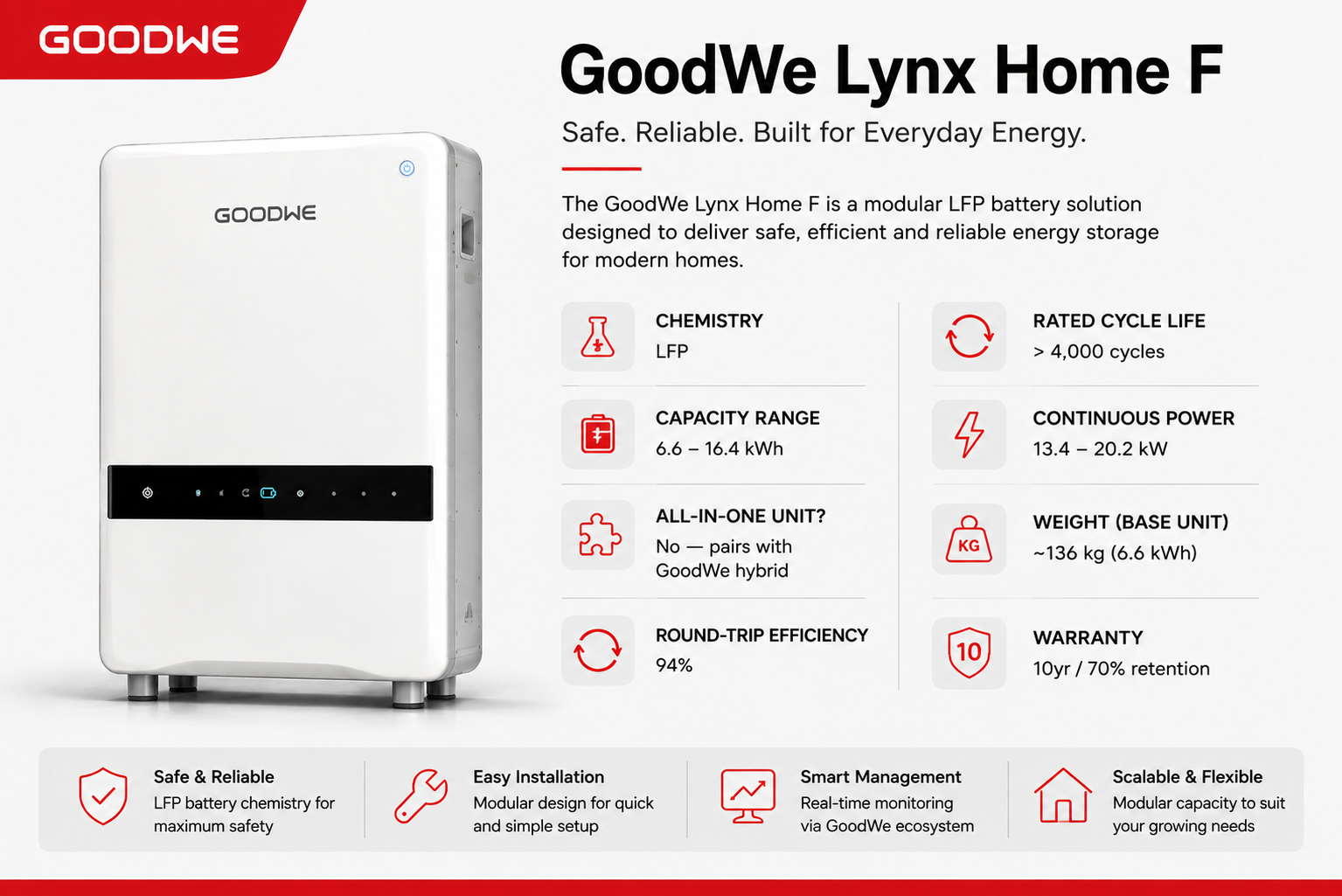
GoodWe’s Lynx range makes sense when the property already has a compatible EH or ET inverter, or when solar and storage are designed together. Its modular format allows capacity to grow in steps.
A home battery backup system needs more than stored energy. The electrician must identify protected circuits, check starting currents and fit the correct switching equipment. Refrigeration, lights, internet equipment and selected power points are usually manageable. Large air conditioners, electric ovens and pumps can exceed inverter output even with charge remaining.
Tesla Suits Steady Evening Loads
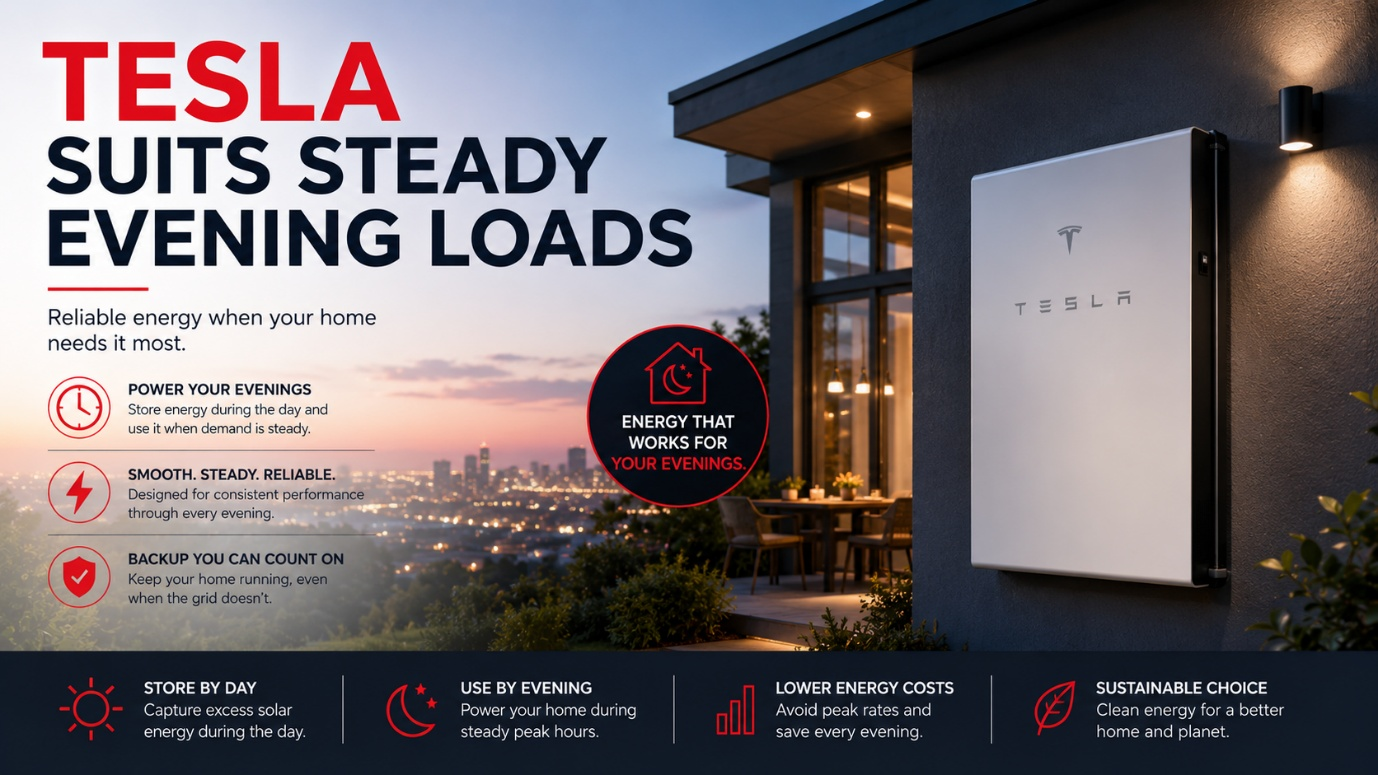
Powerwall 3 offers a familiar 13.5kWh capacity and polished monitoring. It can support outage operation when the gateway, switchboard layout and phase arrangement are designed correctly.
For some households, that fixed capacity fits neatly. For others, it is more battery than they will cycle each day. The best solar battery for Perth homes is the unit that gets regular use without leaving large amounts of paid-for capacity idle. A smaller modular system can sometimes return better value than a larger, better-known product.
Sungrow Leaves Room to Grow
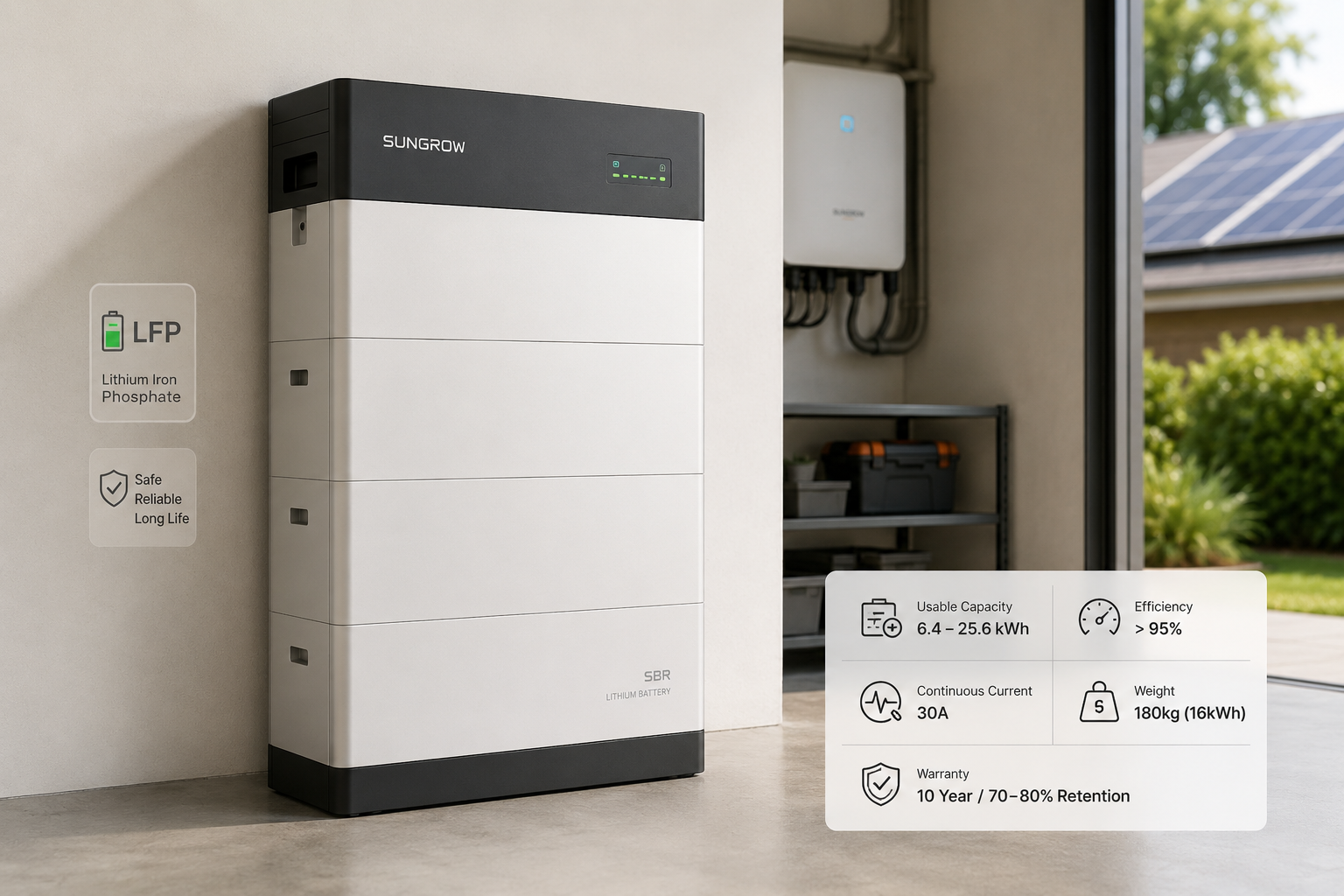
Sungrow’s SBR range starts smaller and expands in modular steps. That suits owners expecting higher electricity use from an electric vehicle, heat-pump hot water or a growing family.
Its pairing with Sungrow hybrid inverters can simplify design and commissioning. Later expansion still needs planning because new and older modules may carry different age, firmware and warranty conditions.
BYD Gives Installers More Choice
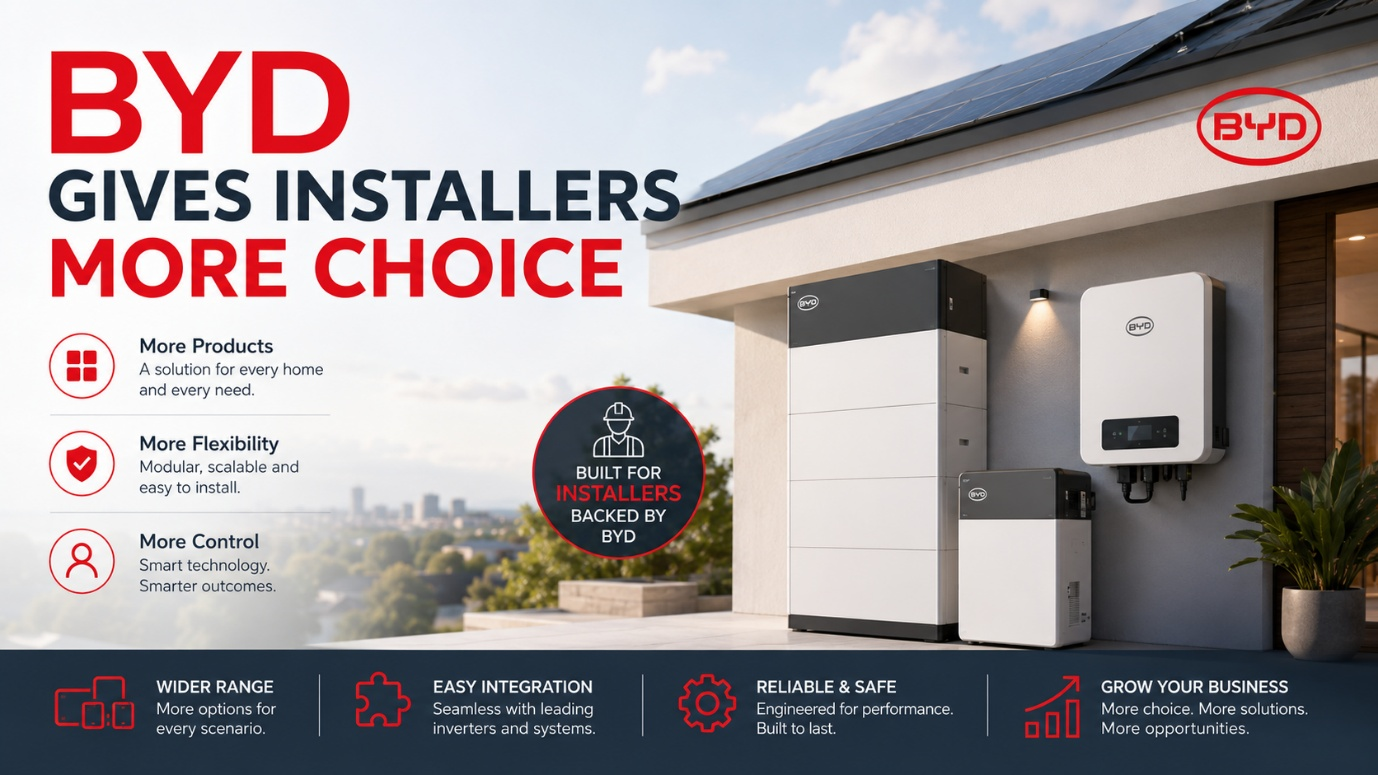
BYD Battery-Box units work with a wider group of compatible hybrid inverters. That flexibility helps when the inverter has already been selected or a project needs a particular three-phase arrangement.
People comparing solar battery brands in Australia should read beyond the headline ten-year warranty. Retained capacity, cycle limits, labour coverage, operating temperature and local replacement stock all affect its real value.
Fox ESS Sets the Benchmark for Compact Stacking
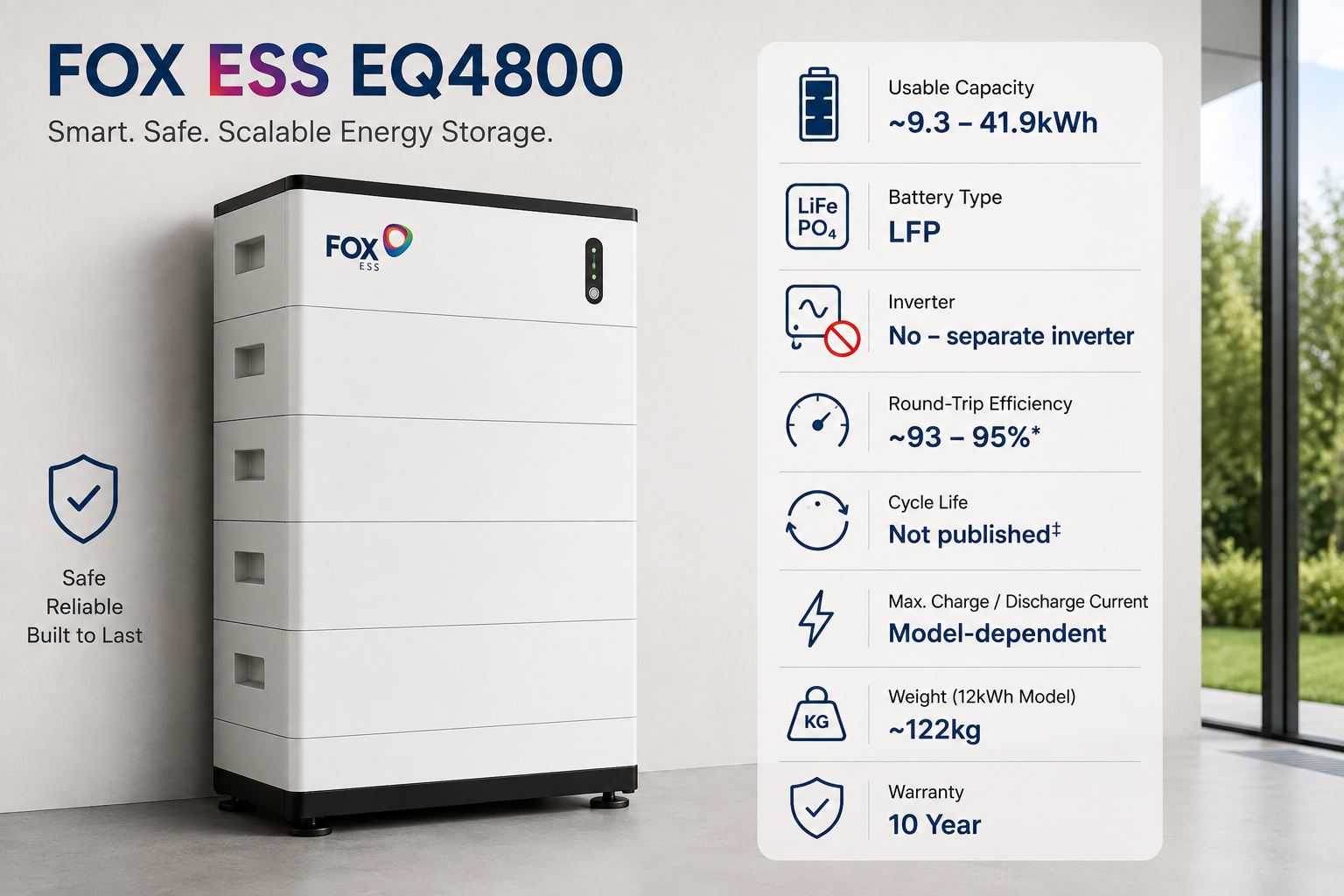
Fox ESS’s EQ4800 modules stack vertically inside a fixed 660mm × 360mm footprint — capacity grows upward, not outward. A single stack runs from around 10kWh up to roughly 40kWh across eight modules, with larger H3 Pro setups able to run dual stacks well beyond that for bigger homes.
This is the layout most homeowners picture when they ask for something “compact and easy to expand” — the base footprint never changes as modules are added, only the height does.
Sigenergy Bundles the Most Into One Tower
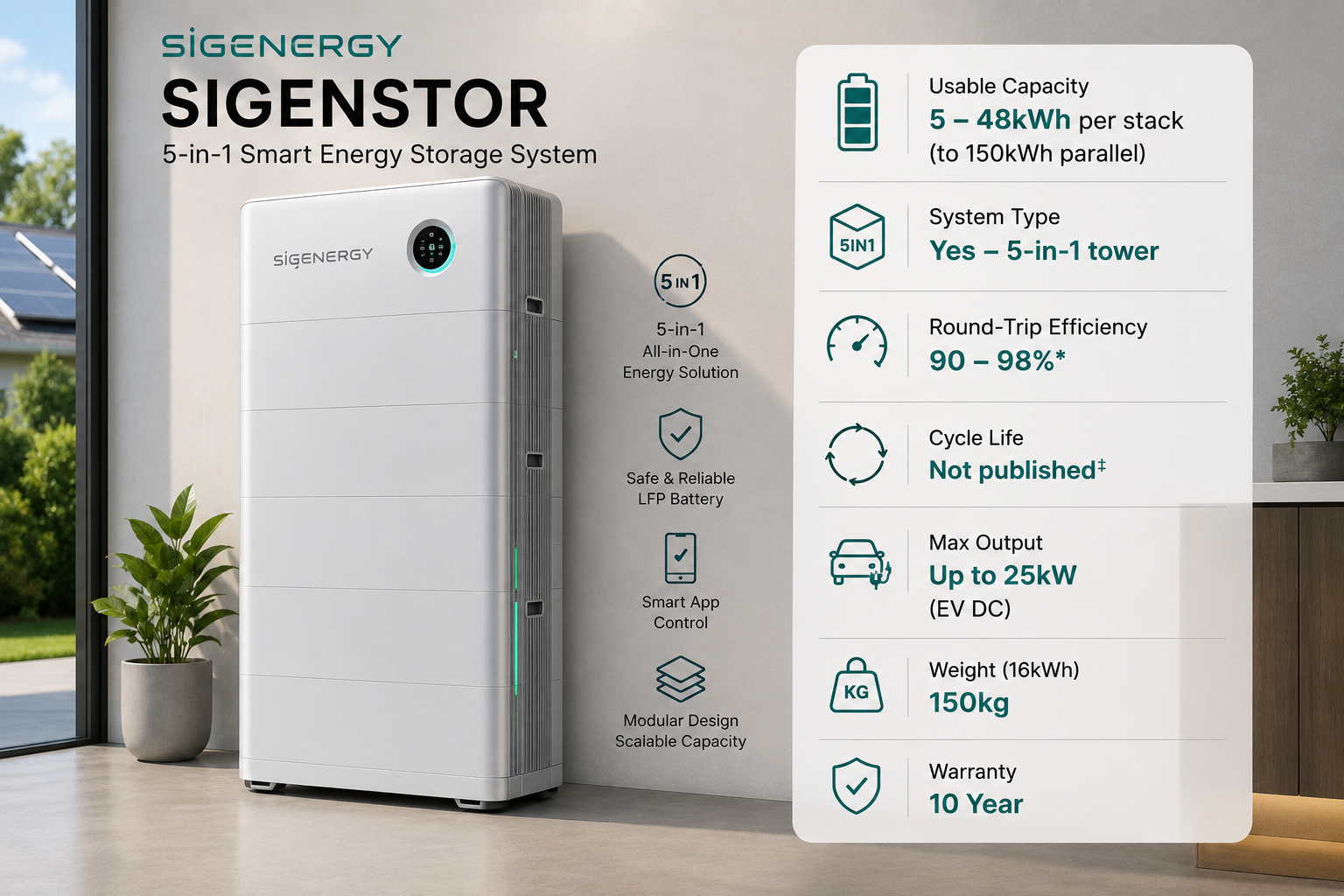
Sigenergy’s SigenStor takes a different approach: it’s a “5-in-1” design combining the hybrid inverter, battery modules, EV charger and energy management in a single stackable tower. Modules stack up to six per stack (roughly 30kWh to 48kWh), and multiple stacks can run in parallel for larger systems.
It trades pure floor-space efficiency for consolidation — fewer separate boxes on the wall — which suits homeowners who’d rather have one integrated unit than several matched components.
Growatt Has the Narrowest Footprint of the Group
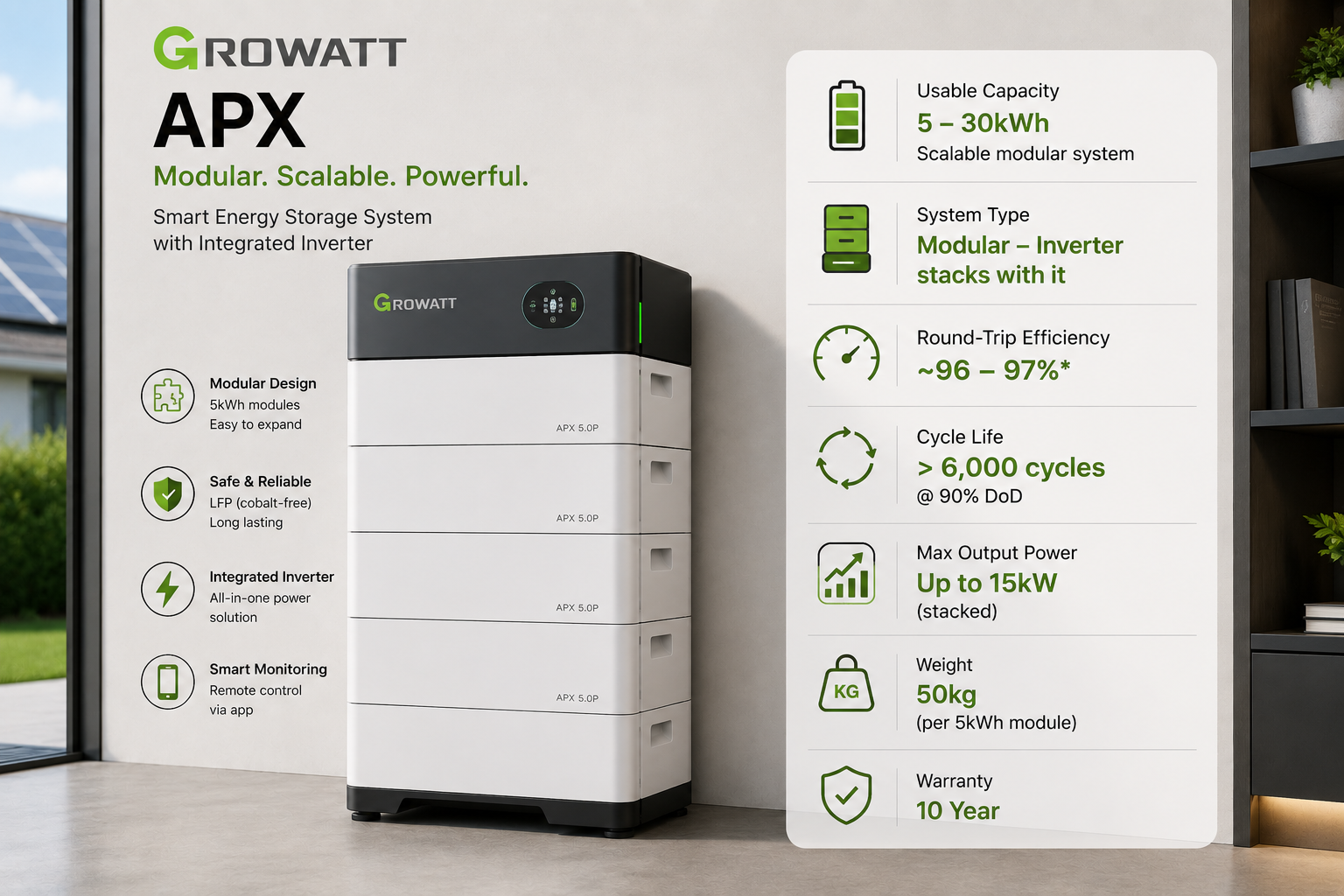
Growatt’s APX modules stack on a base that takes up just 690mm × 185mm of floor space, scaling in 5kWh steps from 5kWh to 30kWh. Its module-level optimisation is a genuine expansion advantage: older and newer battery packs, even different capacities, can sit in the same stack without the whole system being limited by the weakest module.
The trade-off is stack height — Growatt typically needs a second base sooner than Fox ESS does, so very large single-column systems suit Fox ESS slightly better once you’re past 20kWh.
Alpha ESS Depends on Which Series You Pick
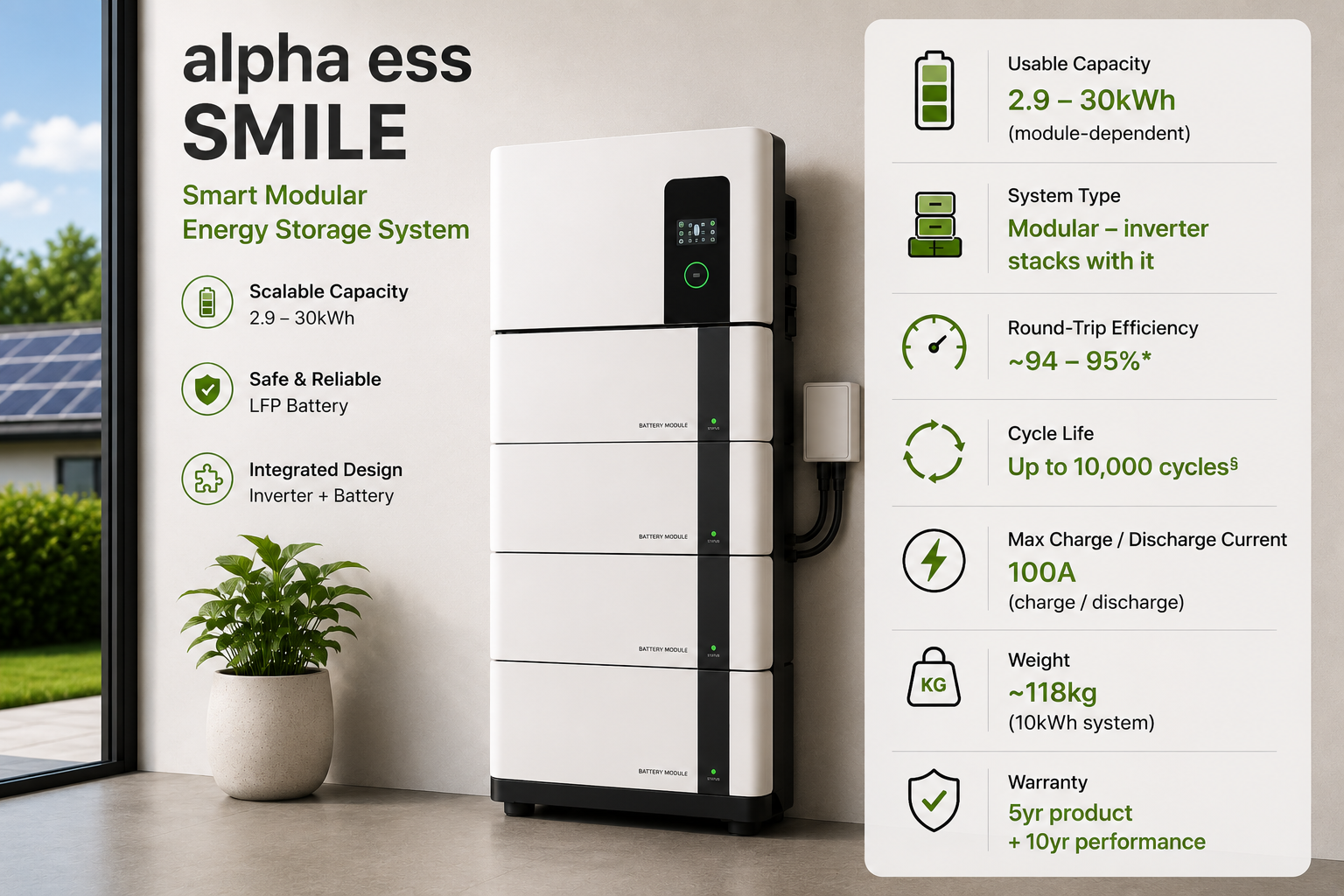
Alpha ESS’s SMILE M5 is genuinely comparable to Growatt and Fox ESS: 5kWh modules, stackable six-high, 5kWh to 30kWh range. Alpha’s larger SMILE T-series (10.1kWh modules) is less flexible to expand — it takes a single 2.9kWh add-on module rather than stacking further full modules, worth knowing if long-term expansion matters more than day-one price.
Not sure which battery actually fits your home?
We’ll match capacity to your real evening usage and existing inverter — not just sell you the brand with the biggest sign.
Get a battery quoteWhich Battery Is Most Compact and Easiest to Expand?
Fox ESS is the usual reference point for a small footprint that grows in simple steps, so here’s how it actually compares once footprint and module size are put side by side.
| Brand | Module footprint | Module size | Max single-stack |
|---|---|---|---|
| Growatt APX | 690 × 185mm (narrowest) | 5kWh | 20–30kWh |
| Fox ESS EQ4800 | 660 × 360mm | ~4.7kWh | ~40kWh |
| Alpha ESS SMILE M5 | 620 × 240mm | 5kWh | 30kWh |
| Sigenergy SigenStor | All-in-one tower (larger unit) | 5–8kWh | 30–48kWh |
WA Approval Rules Can Change the Shortlist
Perth systems connect through Western Power. Ausgrid, Endeavour Energy and Energex rules apply to eastern states, not WA. New or upgraded systems may need approved remote management, compliant export controls and current inverter settings.
An SAA-accredited battery installer should inspect the switchboard, phase supply and existing inverter before making a final recommendation. Federal STCs and the WA Residential Battery Scheme rebate can both reduce the upfront cost — see that guide for current rates by network. WA support can add approved-product, vendor and virtual power plant conditions.
AC-coupled batteries often suit homes keeping a sound solar inverter. DC-coupled designs can work better when the inverter is ageing or the owner is replacing the whole system.
Full Spec Comparison: What the Data Sheets Actually Say
Marketing pages round numbers up. Data sheets don’t. This table follows the same structure SolarQuotes and Solar Choice use for their own comparison tables — nominal vs. usable capacity, all-in-one vs. separate-inverter design, weight — pulled from manufacturer datasheets and warranty documents where published. We’ve left pricing out of this table deliberately; it moves too often and varies too much by capacity and install complexity to list responsibly here — get a site-specific quote for current numbers. Figures a brand hasn’t published an exact number for are marked with an asterisk and explained in the methodology note below.
| Brand / model | Chemistry | Capacity range | All-in-one unit? | Round-trip efficiency | Rated cycle life | Continuous power | Weight (base unit) | Warranty |
|---|---|---|---|---|---|---|---|---|
| GoodWe Lynx Home F | LFP | 6.6–16.4kWh | No — pairs with GoodWe hybrid | >4,000 cycles | 13.4–20.2kW | ~136kg (6.6kWh) | 10yr / 70% retention | |
| Tesla Powerwall 3 | LFP | 13.5kWh (to 54kWh) | Yes — inverter built in | 10yr, unlimited cycles | 11.04kW | 130kg | 10yr, unlimited cycles | |
| Sungrow SBR | LFP | 6.4–25.6kWh | No — separate inverter | Not published‡ | 30A continuous | 180kg (16kWh) | 10yr / 70–80% retention | |
| BYD Battery-Box HVM | LFP (cobalt-free) | 8.1–22.1kWh (to 66.2kWh) | No — separate inverter | 6,000 cycles @ 90% DoD | 50A max output | ~243kg (16.6kWh) | 10yr | |
| Fox ESS EQ4800 | LFP | ~9.3–41.9kWh | No — separate inverter | Not published‡ | Model-dependent | ~122kg (12kWh) | 10yr | |
| Sigenergy SigenStor | LFP | 5–48kWh per stack (to 150kWh parallel) | Yes — 5-in-1 tower | Not published‡ | Up to 25kW (EV DC) | 150kg (16kWh) | 10yr | |
| Growatt APX | LFP (cobalt-free) | 5–30kWh | Modular — inverter stacks with it | >6,000 cycles | Up to 15kW (stacked) | 50kg (per 5kWh module) | 10yr | |
| Alpha ESS SMILE | LFP | 2.9–30kWh (module-dependent) | Modular — inverter stacks with it | Up to 10,000 cycles§ | 100A charge/discharge | ~118kg (10kWh) | 5yr product + 10yr perf. |
No single battery wins on every metric, which is exactly why “the best battery” isn’t a fixed answer. BYD’s efficiency edge is real but small in daily dollar terms; Tesla’s single-unit power output matters far more if you’re running a home off one box rather than a stack; Alpha ESS’s cycle-life figure is genuinely outstanding on paper but applies to a smaller module than most Perth homes install as their primary unit. The honest reading of this table is that the field has converged — every brand here is a legitimate, safe LFP system, and the differences that actually change your bill are inverter compatibility, sizing to your real usage, and installation quality.
Final Perspective
The best solar batteries in Perth are not ranked by brand recognition alone. GoodWe suits matched hybrid systems, Tesla offers strong controls, Sungrow provides flexible expansion, and BYD gives installers broader inverter choice. For homeowners specifically after a small footprint that grows in simple steps, Growatt and Fox ESS are the closest match, Alpha ESS’s SMILE M5 runs a close third, and Sigenergy trades some of that compactness for an all-in-one design.
The right answer still depends on measured night-time use, available solar, backup expectations, phase supply and local service access. Solar Red can assess those details and prepare a site-specific comparison. Homeowners may request a system design consultation when they are ready.
Frequently Asked Questions
- What are the best solar battery brands in Perth?
- The best solar battery brands in Perth include GoodWe, Tesla, Sungrow, BYD, Fox ESS, Sigenergy, Growatt and Alpha ESS. Each offers different advantages depending on your home’s energy usage, inverter compatibility, backup power needs, future expansion plans and local installation requirements.
- How do I choose the best solar battery for my Perth home?
- The best solar battery for Perth homes should be selected based on your evening electricity consumption, available solar generation, existing inverter, backup power requirements and future energy needs rather than brand popularity or battery size alone.
- Which solar battery brand is best for expanding storage in the future?
- For pure expansion flexibility, Growatt APX and Fox ESS are the standout options — both use a compact, stackable design where capacity grows in simple steps without a larger footprint. Sungrow SBR and Alpha ESS’s SMILE M5 are also genuinely modular. Actual availability depends on compatibility with your existing inverter and installation requirements.
- Are Tesla, GoodWe, Sungrow and BYD batteries approved for installation in WA?
- These battery brands may be eligible for installation in Western Australia when paired with approved equipment and installed by an SAA-accredited installer. Homeowners should also ensure the system meets Western Power connection requirements and applicable WA battery scheme conditions.
- Why is professional battery sizing important before buying a solar battery?
- Professional battery sizing ensures your storage system matches your home’s actual energy usage. A correctly sized battery can improve solar self-consumption, reduce electricity bills and avoid paying for unused battery capacity while maximising long-term value.
- Which solar battery is the most compact and easiest to expand?
- Growatt APX and Fox ESS are generally the most compact, with a small floor footprint that grows upward as modules are added rather than outward. Alpha ESS’s SMILE M5 is comparable. Sigenergy takes a different approach, combining the inverter and battery into one all-in-one tower rather than prioritising the smallest possible footprint.