
In this guide
Western Australia’s solar market moved into a storage-led phase in 2026. As export payments shrink, the WA Residential Battery Scheme‘s interest-free loan gives eligible households a practical way to fund a battery without covering the full cost upfront. This guide walks through it in the order that actually matters: the financial rules first, then your system, then the application itself. No fluff, no guessing at eligibility.
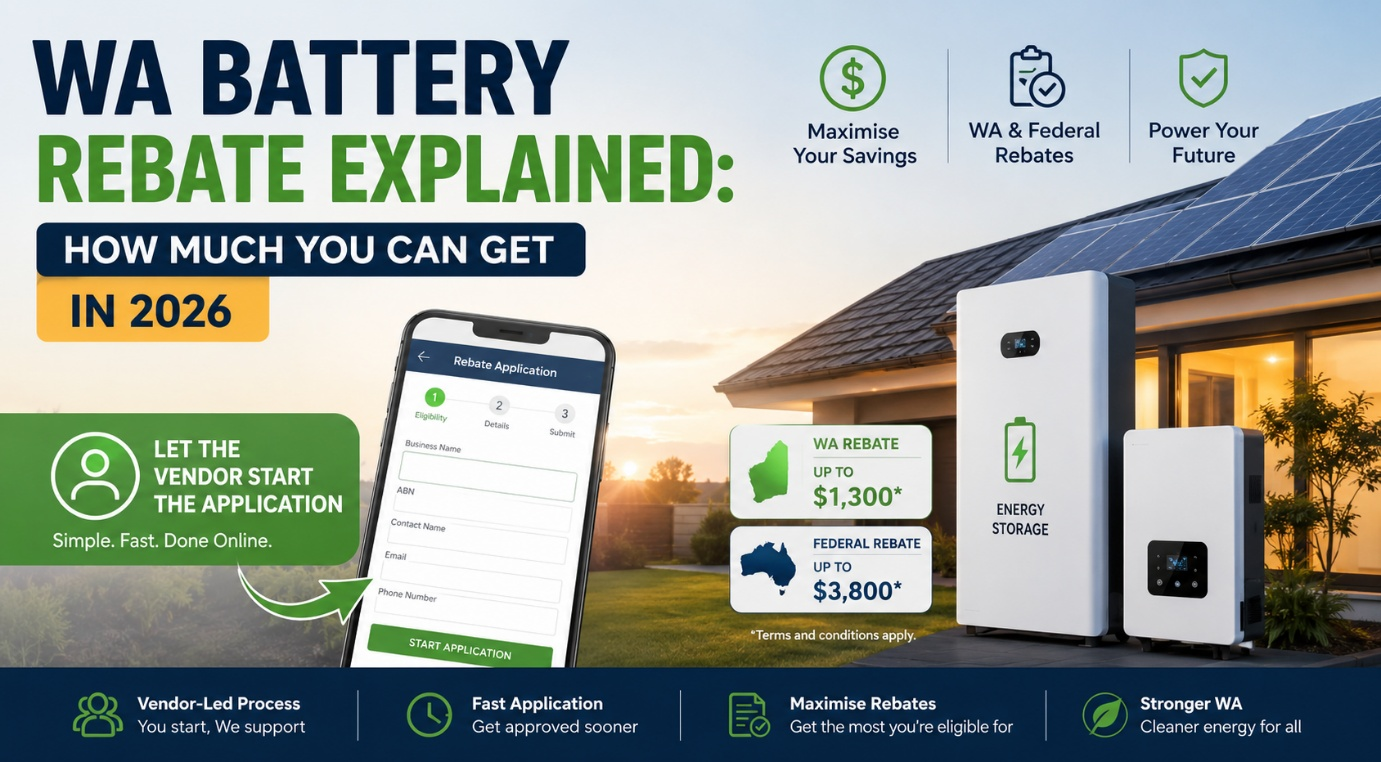
1 Check the Financial Rules First
The loan amount runs $2,001 to $10,000, repaid over three to ten years, at 0% interest — no establishment charge, no early repayment fee.
The loan and the WA state rebate are separate, but they stack on the same project — together they can’t exceed the battery package’s actual purchase and installation cost. Late repayments carry a $10-per-week fee, capped at $120 a year — worth knowing before you set up repayments, not after a missed one.
This finance sits inside the broader WA Residential Battery Scheme, which also requires VPP participation and approved equipment — covered in Steps 4 and 6.
2 Review Your Existing Solar System
Ask an accredited vendor to inspect the inverter, switchboard, phase arrangement, available roof generation, and communications capability. Older systems sometimes need wiring work or a new inverter to meet whole-of-site compliance and remote-management rules.
Model real solar production, not nameplate capacity
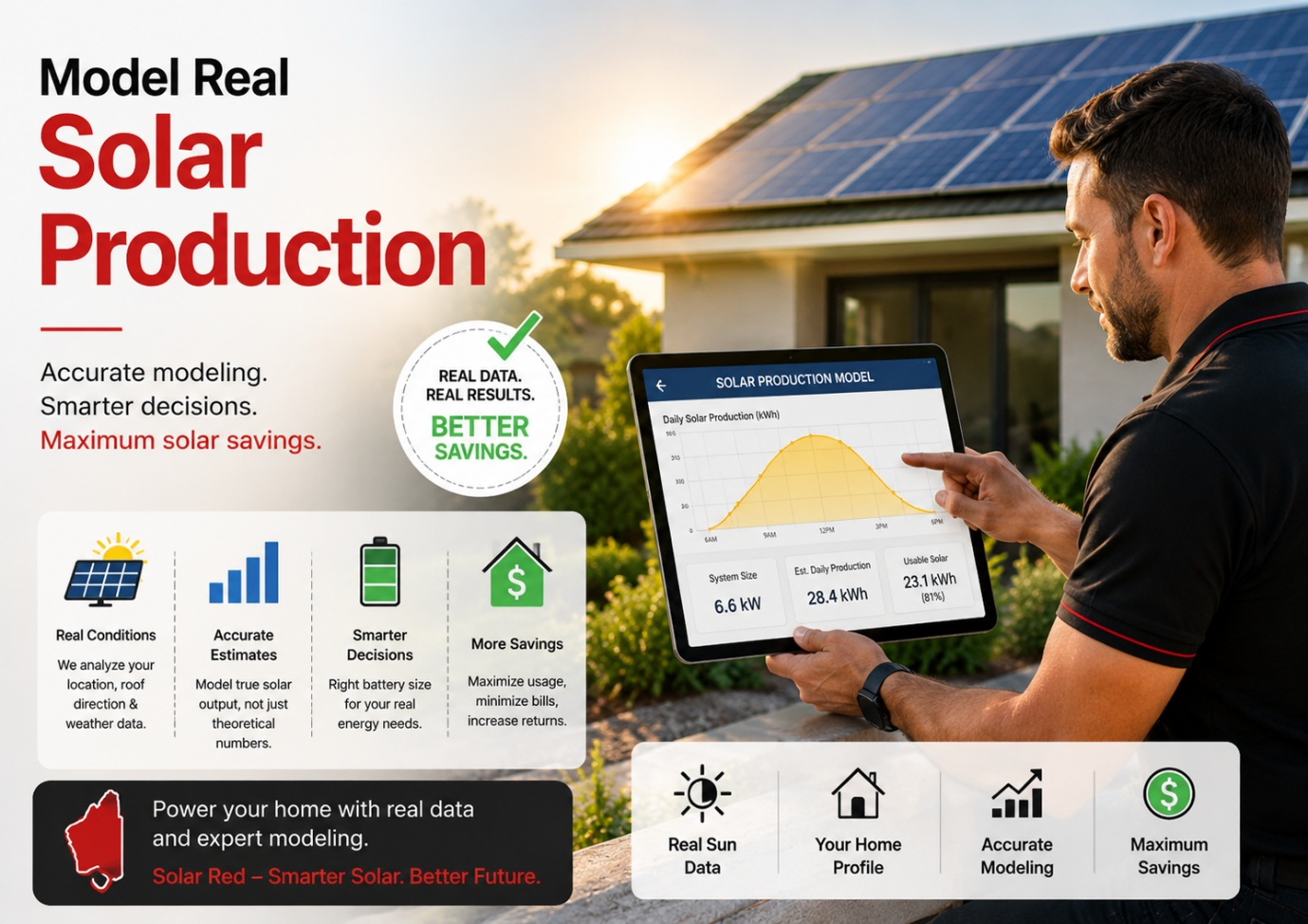
A sound 5kW inverter paired with roughly 6.6kW of panels can often still support a retrofit — fifteen 440W Tier-1 modules make up that common array size. Some midday clipping is normal, since panels can briefly produce more DC power than the inverter converts. Perth heat and gradual module degradation both reduce real-world output, so sizing should use seasonal generation, not the number printed on the panel.
What your existing setup likely means for the design
| Existing equipment | Likely design path | Main point to check |
|---|---|---|
| Modern solar inverter | AC-coupled battery | Added conversion losses and switchboard space |
| Ageing inverter | DC-coupled hybrid system | Replacement cost and panel compatibility |
| New solar and battery | Integrated hybrid design | Export controls and future expansion |
3 Choose the Battery Architecture
The loan application should only start once the installer has matched storage capacity to your actual evening use — not before.
AC coupling often preserves a serviceable existing solar inverter. DC coupling can reduce conversion stages and suits a full system replacement. Neither option automatically provides blackout power — backup circuits, changeover equipment, and battery inverter output all need to be specified separately if that’s something you want.
4 Select an Approved Vendor
Don’t buy equipment first and try to claim support afterwards. Choose a business listed in the Plenti Vendor Directory, then confirm the proposed battery and inverter appear on the relevant Synergy or Horizon Power supported-solutions list.
The installation must use an SAA-accredited battery installer and CEC-listed products. Federal STCs can reduce the quoted price too — since 1 May 2026, usable battery capacity earns 6.8 STCs/kWh for the first 14kWh (down from 8.4 before that date), tapering further for larger capacity bands.
For a battery loan package specifically, the loan can also cover new or upgraded panels and an inverter when they’re part of the battery installation — you don’t need to already own solar to qualify.
5 Let the Vendor Start the Application
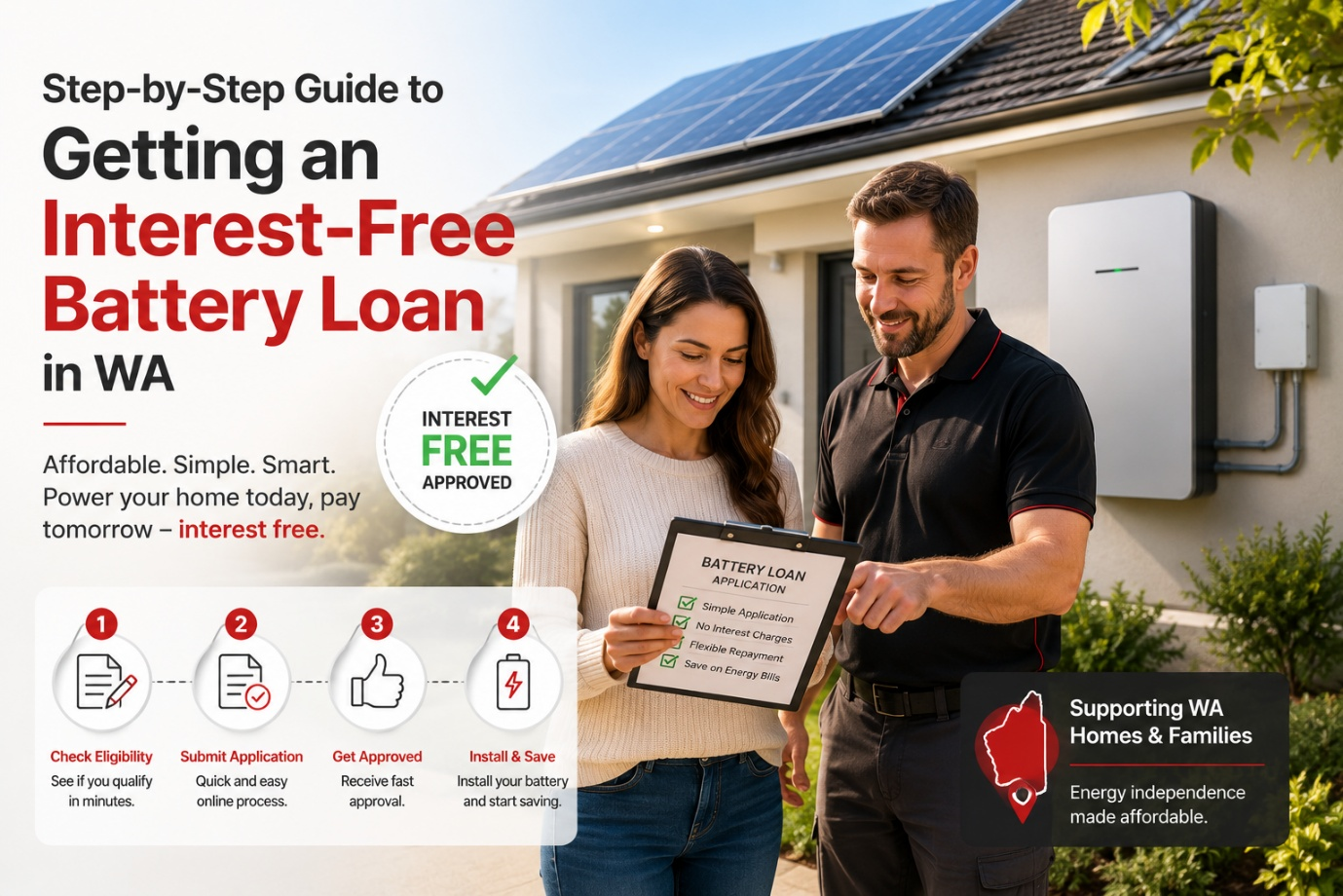
The accredited vendor submits the scheme request to Plenti on your behalf. Plenti then contacts you directly to verify identity, income, and financial information. Have recent tax records and household income details ready for the credit assessment.
6 Approve the Network and VPP Arrangements
Western Power governs most metro connections; Horizon Power applies its own rules in regional WA. Ausgrid, Endeavour Energy, and Energex are eastern-state network rules and don’t apply here.
From May 2026, new or upgraded systems on the Western Power network may need compliant remote-connection functions, retailer commissioning, and AS/NZS 4777.2 Region B settings. You’ll also need to join an eligible VPP for a minimum two-year term — the financed equipment operates as a grid-interactive asset, not just a battery mounted beside the switchboard.
Final Perspective
A successful outcome here depends on more than passing an income test. The strongest applications combine a realistic evening-load profile, enough solar surplus, compatible inverter hardware, approved network settings, and a repayment term that actually fits the household budget. A 10kWh battery works well for many families, but measured consumption — not a round number — should decide the size.
Why Solar Red
Plenti-accredited vendor, locally based, SAA-accredited installers. Solar Red can assess your existing system and prepare a compliant design — request a system design consultation when you’re ready to look at the options.
FAQs
- Can I apply if I already have solar panels?
- Yes. Existing systems can qualify if they’re compatible with the new battery — an accredited installer checks your inverter, switchboard, generation and electrical setup first.
- Do I need an approved installer?
- Yes — a Plenti-accredited vendor using SAA-accredited installers and CEC-listed products, with equipment on the Synergy or Horizon Power supported list.
- Is joining a VPP required?
- Yes, for a minimum two-year term. It’s a condition of the scheme, not optional add-on.
- What documents does Plenti ask for?
- Proof of identity, recent tax records, household income details, and any further documents requested during the credit assessment.
- Can the loan cover solar panel upgrades?
- Yes — new or upgraded panels and an inverter can be included when they’re part of the approved battery package.
- Is this loan only for low-income households?
- No. The threshold is a $210,000 household income ceiling, not a low-income means test — most homeowners fall under it comfortably.
- What happens if I miss the six-month window?
- Conditional approval lapses and you’ll need to resubmit the application. There’s no extension, so it’s worth planning the install date as soon as you’re approved.