
In this guide
Search “solar battery installation Perth” and most results read the same: a description of a site visit, a mention of accredited installers, and a quote form. That’s not wrong, but it skips the parts that actually determine whether an installation goes smoothly — the compliance rules that can add a switchboard upgrade to your quote, the physical placement restrictions that rule out some “obvious” spots, and the electrical reason a smaller inverter might not give you the backup power you think it will. This guide covers those parts directly, with the actual standards behind them.
The Installation Process, Overview First
Before the compliance detail, here’s the shape of the whole job. Every step below gets its own section further down if you want the depth — this is the map.
Before install day
- Site assessment — roof, switchboard, meter box, battery location
- System design and formal quote
- Grid connection application lodged with Western Power
- Any switchboard upgrade completed, if needed
Install day and after
- Physical mounting, wiring, and commissioning
- Testing and safety checks
- Metering configuration
- System handover and monitoring app setup
The two items in that first column — the switchboard check and the grid application — are where most of the real variability in timeline and cost comes from, and they’re exactly what the rest of this guide covers in detail.
The Main Switch Rule Most Installers Don’t Lead With
This is the single most common compliance surprise on WA battery jobs, and it has nothing to do with the battery itself.
Since February 2022, Western Power requires a circuit breaker main switch
Any property connecting solar, a battery, or an EV charger must have a circuit breaker — not an older isolator-style switch — as its main switch, rated to the site’s current supply allocation. This isn’t retrospective for existing homes in general, but it applies the moment you do exactly what you’re reading this guide to do.
The technical reason: an MCB provides automatic overcurrent protection: it trips on a fault, where an older link-style isolator just sits there. Once a battery or inverter is feeding into the system as a second power source, that automatic protection becomes part of how the whole network stays safe — not just a nice-to-have for one house.
If your home’s existing main switch is already a circuit breaker, this costs you nothing and changes nothing. If it isn’t, it’s better to know at the site assessment than to have it surface as a surprise line item partway through the job — which is exactly the kind of thing a proper assessment should be checking for, not assuming.
Where a Battery Can Legally Go
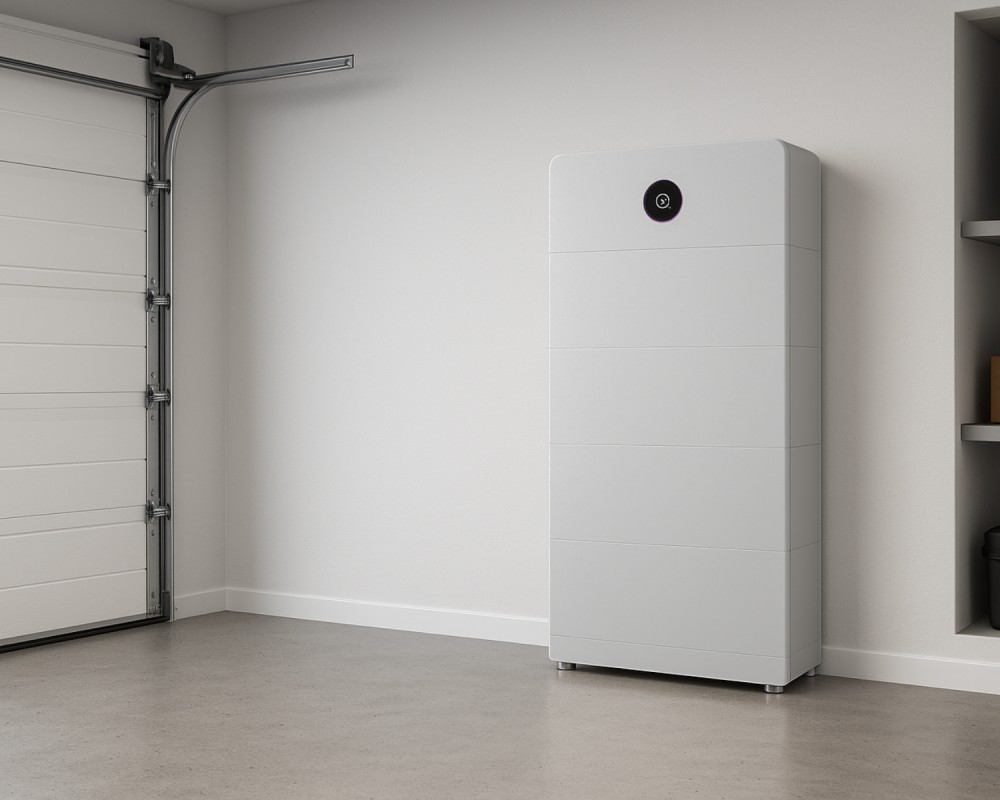
AS/NZS 5139 governs where a battery can and can’t be installed, and it’s more specific than most homeowners expect — this isn’t just “somewhere in the garage.”
Restricted locations under the standard
- Within 600mm of any vertical side of a window, or a ventilation opening into a habitable room
- Anywhere restricted for switchboards under AS/NZS 3000
- In an evacuation or escape route
- Ceiling cavities and under stairs are both effectively ruled out — heat build-up and escape-path obstruction respectively
Standard clearance requirements are 600mm either side of the unit and 900mm above it, with nothing unrelated to the battery’s operation inside that exclusion zone. If the mounting wall is a combustible material like timber, a non-combustible barrier — cement sheeting is the common fix — goes behind the unit.
Worth knowing: the rules changed in December 2025
Amendment 1 to AS/NZS 5139 became mandatory on 19 December 2025, and it added a specific exception for garage door openings: a battery can now be installed within 600mm of a garage door (where the opening is wider than 900mm), provided safe walk-through clearance is maintained and the clearance is no less than 1m from the front or side a person would need to pass. If you’ve seen older advice saying garages were effectively off-limits near the door, that’s now out of date — but both conditions need to be met, not just one.
None of this is something to work out yourself from a garage floor plan. It’s exactly what a proper site assessment is for — and it’s worth asking directly whether your installer is assessing against the current amended standard, given how recently it changed.
Three-Phase Homes: Why Inverter Size Matters for Real Backup
This is a genuine electrical constraint that’s easy to miss when comparing battery quotes, because it’s about the inverter, not the battery.
A three-phase inverter splits its total output evenly across all three phases. A 5kW three-phase inverter delivers roughly 5000W ÷ 3 ÷ 230V ≈ 7.2A per phase. Most Australian general power circuits are wired for 16A or 20A. That gap means a modest three-phase inverter can hold a full battery’s worth of energy without having enough current on any single phase to reliably carry a full-rated circuit during a blackout.
| Inverter size (3-phase) | Approx. current per phase | Common circuit rating |
|---|---|---|
| 5kW | ~7.2A | 16A / 20A |
| 10kW | ~14.5A | 16A / 20A |
A 10kW inverter roughly doubles the per-phase headroom — meaningfully closer to covering a genuine 16A circuit, though not an absolute guarantee across every model, since some three-phase inverters support “phase imbalance” and can direct more current to a single phase rather than splitting evenly. On a single-phase property, this specific issue doesn’t apply the same way — a 5kW inverter through one phase delivers over 21A, comfortably above a 16A circuit.
The practical takeaway: if genuine whole-home blackout backup on a three-phase property matters to you, that’s a conversation about inverter sizing specifically, not just battery capacity — worth raising directly rather than assuming a bigger battery automatically means better backup.
Credentials That Actually Matter
“Accredited installer” gets used loosely in marketing. Two specific credentials are worth checking for by name.
CEC vs SAA — not the same thing
- CEC (Clean Energy Council) accreditation covers general solar panel installation
- Battery installation specifically requires SAA accreditation — a separate, additional qualification
- An installer can be fully CEC accredited for solar without holding the SAA battery endorsement
Worth asking any installer directly
- Are you SAA accredited specifically for battery installation, not just CEC for solar?
- Do you handle both the WA state rebate and federal rebate paperwork, or just one?
- Who attends if something needs fixing after install — the same installer, or a subcontracted network?
Solar Red holds CEC accreditation, SAA battery accreditation, and NECA membership, with the same installers handling the quote, the install, and any aftercare — not a handoff between separate teams.
Installation Day, Step by Step
Realistic Timeline
The physical install itself is usually a single day for a standard residential system. What surrounds it is where the real variability sits:
- Grid connection approval through Western Power typically runs 2–4 weeks and happens before installation day, not after
- A switchboard upgrade, if the main switch check flags one, is a separate job that needs to happen first — add the time for a licensed electrician to schedule and complete it
- VPP enrolment, if claiming the WA rebate, is generally straightforward but adds its own short administrative step
What Affects the Cost
We don’t publish a fixed installation price here, because the honest answer is that it depends on real, variable factors — not because the number is hidden.
- Battery capacity and brand
- Single-phase vs three-phase inverter requirements
- Whether a switchboard upgrade is needed
- Backup circuit configuration, if whole-home or partial backup is part of the design
- Cable run length between battery, inverter, and switchboard
- WA and federal rebates, applied before any interest-free finance
An itemised quote should show these separately — rebates shown apart from the system cost, not folded into one number you can’t unpick.
Get an installation quote that shows the real factors
Site assessment first, itemised quote after — including whether your switchboard needs anything before we can proceed.
Get a free quoteExplore More Solar Red Guides
FAQ
- How long does solar battery installation take in Perth?
- The physical install is usually done in a day for a standard residential system. What varies is everything around it: Western Power’s grid connection approval typically runs 2–4 weeks, and if your switchboard needs upgrading first, that’s a separate job that has to happen before installation day, not on it.
- Can a battery be installed anywhere in my house?
- No. AS/NZS 5139 sets specific restricted locations: not within 600mm of a window or ventilation opening into a habitable room, not in an evacuation route, not in a ceiling cavity or under stairs. A December 2025 amendment added a specific exception allowing placement closer to a garage door opening, provided safe walk-through clearance is maintained.
- Does my switchboard need to be upgraded before I can get a battery?
- Possibly. Since February 2022, Western Power has required a circuit breaker main switch, rated to the site’s supply allocation, before energising solar, a battery, or an EV charger. If your home has an older-style isolator, that upgrade has to happen first, as a separate cost.
- What’s the difference between CEC and SAA accreditation for battery installers?
- CEC accreditation covers general solar panel installation. Battery installation specifically requires SAA accreditation — a separate qualification. An installer can hold CEC accreditation for solar without the SAA battery endorsement, so it’s worth asking specifically.
- Why does my inverter size matter for battery backup during a blackout?
- On a three-phase property, backup output splits across all three phases. A 5kW three-phase inverter delivers roughly 7.2A per phase — below what a 16A or 20A circuit needs. A battery can hold plenty of energy without the inverter having enough current on any single phase to reliably run a full circuit during an outage.