How a solar battery is installed in Perth: the complete step-by-step guide
Home › Blog › How a battery is installed
How a solar battery is installed in Perth: the complete step-by-step guide
What actually happens when a battery goes in at your place? We walk you through the whole job, the way our electricians do it every week across Perth: approvals, sizing, where the battery can go, the switchboard work, the CT clamp, testing and the paperwork you should get at the end.
The short answer
- Approvals first: your retailer reference and Western Power approval come before any battery goes on the wall.
- One day on site: most home installs are done in a day, with the power off for part of it while we work in the switchboard.
- Location rules: a garage or shaded outside wall, clearances around it, and a bollard wherever a car could reach it.
- The CT clamp matters: it tells the battery what your home is doing. Placed wrong, the battery works against you.
- Paperwork: you should get an Electrical Safety Certificate, and we lodge a Notice of Completion with the network.
In this guide
- From first call to switch-on
- Approvals before we install
- Sizing the battery and inverter
- Master and slave inverters
- Space, clearances and bollards
- Install day, step by step
- Why the power goes off for a while
- How the CT clamp works
- What our installers use
- Standards and rules we follow
- Testing and commissioning
- Paperwork you should get
- Real Solar Red installs
- FAQ
A battery install looks simple from the outside: a white box goes on a wall and the app lights up. Behind that is a fair bit of planning, approvals, electrical work and testing, all governed by Australian standards and WA rules. Knowing what goes on helps you ask the right questions and spot a rushed job.
We take pride in our work. Every install is done by our own licensed, battery-accredited Perth electricians, and we treat your home like our own: neat cabling, everything labelled, nothing left half-done.
From first call to switch-on
Synergy says the full process for a solar or battery system, from accepting a quote to switch-on, can take up to three months. Most of that time is approvals, not work on site.
Photos and a quick chat
You send us photos of your meter box and switchboard, the wall you have in mind and a recent bill. That tells us most of what we need before anyone visits.
Site check and design
We confirm single or three phase, switchboard condition, cable runs and the battery spot, then design the system around your usage.
Quote and rebates
You get a written quote with the federal and WA rebates already applied. If you’re using the WA interest-free loan, we lodge the application with Plenti for you.
Network approval
We get a reference number from your retailer and apply to Western Power. Installation waits until Western Power approves.
Install day
Our electricians mount the battery, run the cabling, do the switchboard work and fit the CT clamp, usually in one day.
Testing and commissioning
We test the system, set the inverter to Australian grid settings and register it with your retailer’s platform.
Paperwork and handover
We lodge the Notice of Completion, give you your Electrical Safety Certificate and show you the app.
Approvals before we install
You need Western Power approval before installing a new solar or battery system. Western Power says most battery applications get preliminary approval to install within 15 business days. Here’s who signs off on what.
Rebate details change, so check our guides to the federal battery rebate, the WA battery rebate and the interest-free battery loan.
Sizing the battery and inverter
Two numbers matter. kWh is how much energy the battery stores, which decides how far into the night it lasts. kW is how much power the inverter can deliver at once, which decides how many appliances it can run together. A big battery on a small inverter runs out of puff when the air-con, oven and kettle are all on.
WA also sets limits on what can be connected. Since 1 May 2026, new or upgraded systems on Perth’s grid can have up to 30 kVA of inverter capacity on a standard single- or three-phase connection.
Limits from Western Power and Energy Policy WA. Your exact approval depends on your connection and your street.
| Setup | How it works | Best for |
|---|---|---|
| Hybrid inverter (DC coupled) | One inverter runs both panels and battery | New solar and battery together, or replacing an old inverter |
| AC coupled battery | The battery has its own inverter beside your existing solar inverter | Adding a battery to newer solar you want to keep |
| All-in-one | Inverter and battery modules in one stack | Tidy installs where wall space is tight |
Not sure where to start? Our guide to what size battery you need walks through it.
Master and slave inverters (parallel systems)
Bigger homes sometimes need more power than one inverter can give. Instead of one huge inverter, we connect two or more in parallel. One is set as the master: it reads the meter or CT clamp and decides what the system should do. The others are slaves that follow its lead, sharing the load and charging and discharging together.
When we use it
Large three-phase homes, homes with big loads like pool heating or EV charging, or when a customer wants to grow the system later.
How it’s wired
The inverters are linked with a communication cable so they act as one system. Most brands allow a set number in parallel. GoodWe’s ET G2 series, for example, supports up to 4 units.
Staying inside the limits
Every inverter counts towards the 30 kVA total, and Western Power has phase balancing rules, so we design parallel systems carefully.
Space, clearances and bollards
Where the battery goes is set by AS/NZS 5139, the Australian battery safety standard. Amendment 1 was published in December 2025, and WA electricians must comply with it in full from 19 June 2026. Here are the key rules for a home.
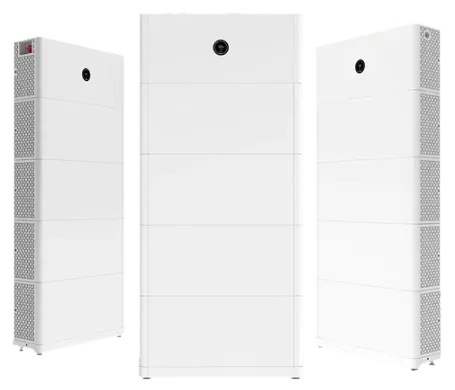
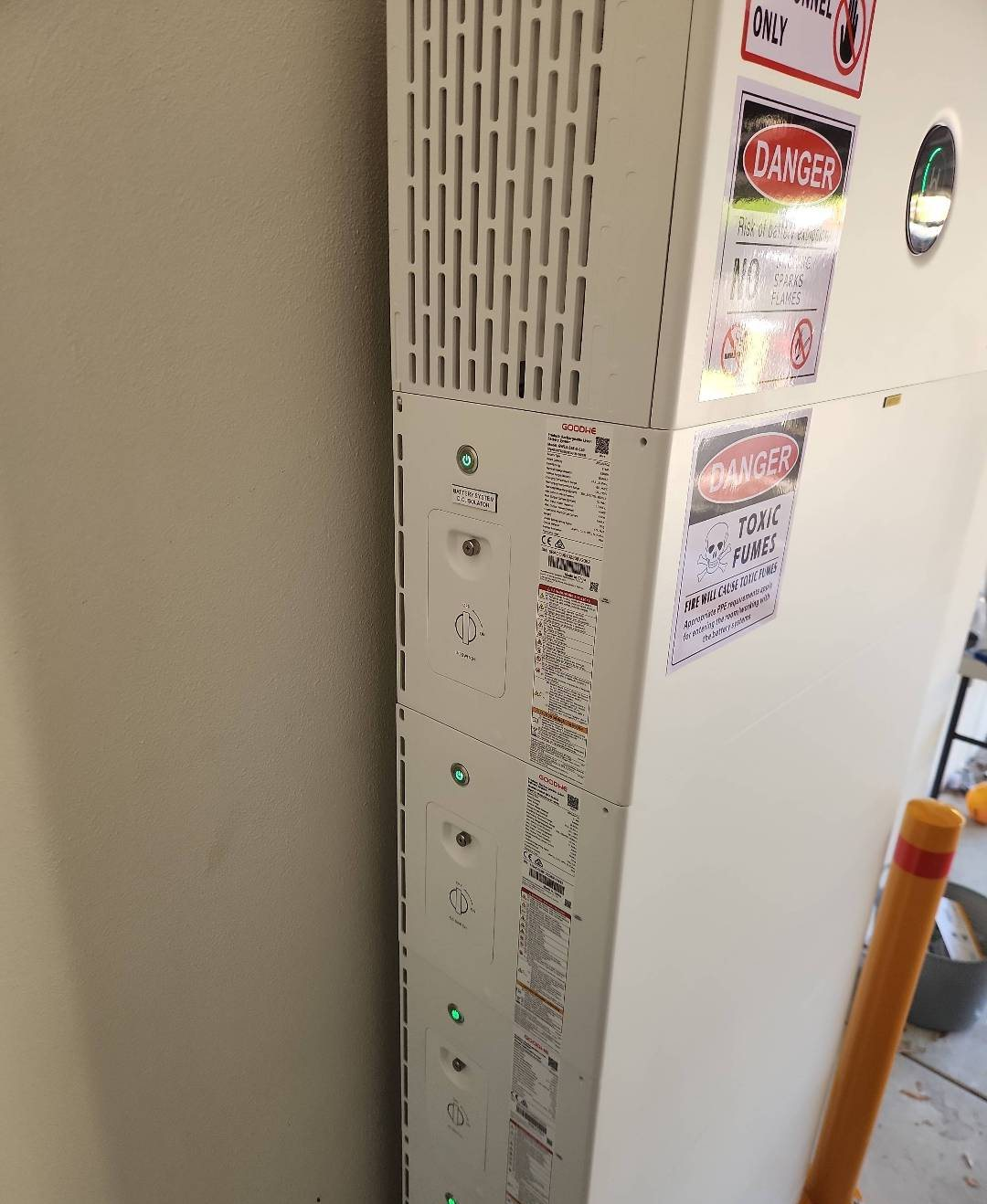
Weight matters too. A single 9 kWh GoodWe Lynx D G2 module weighs about 77 kg and measures 800 × 326 × 270 mm, and a big system is several of those stacked. We check the floor or wall can take it. A plasterboard or timber wall needs a non-combustible sheet behind the battery.
The full rules, with photos, are in our Perth battery location guide.
Install day, step by step
Safety check and walk-through
We walk the job with you, confirm the battery spot and cable runs, and set up the work area with signs and safety gear.
Mounting the battery and inverter
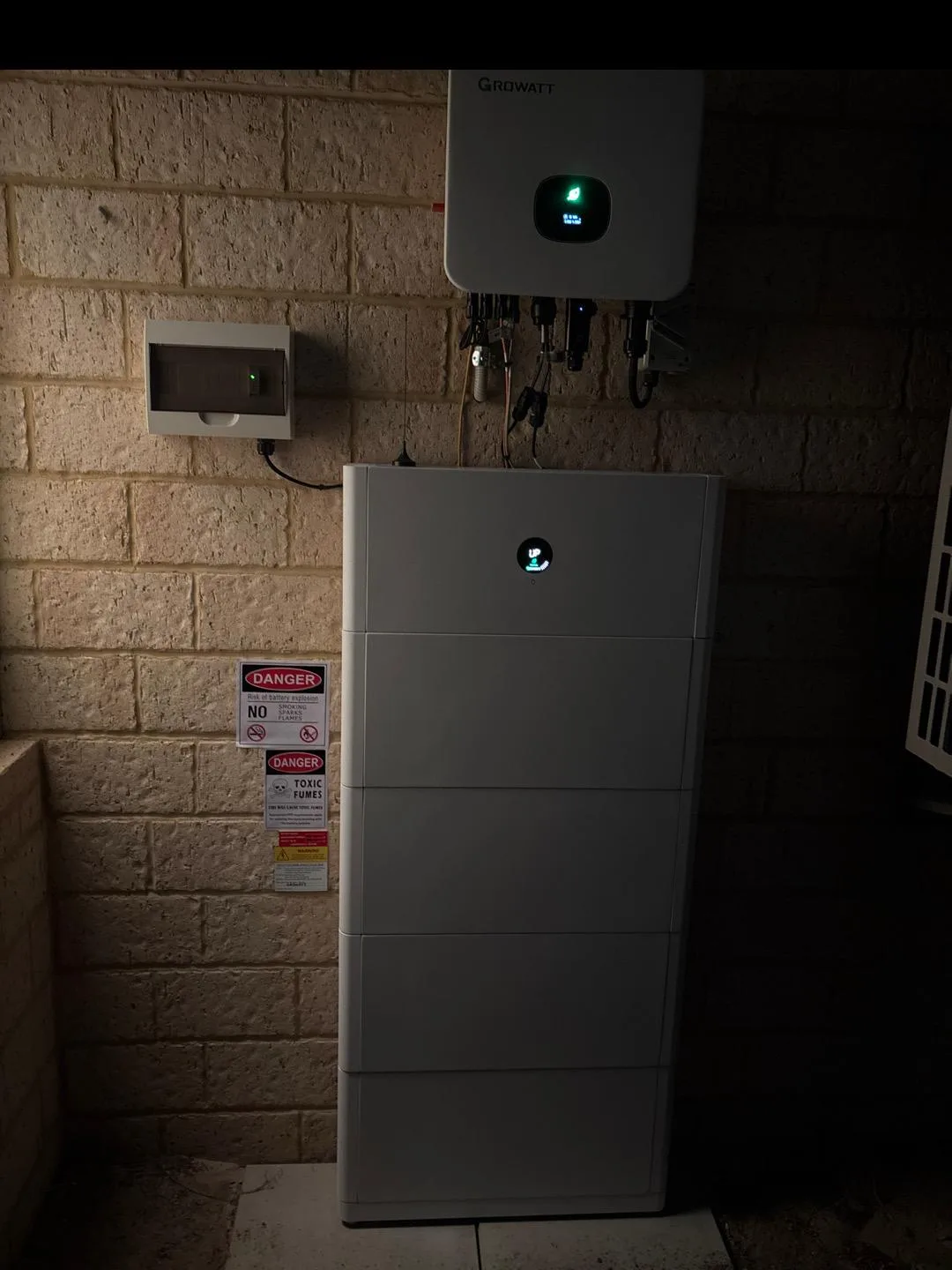
The battery goes on its bracket or base and is levelled and secured. The inverter mounts beside or on top of it, depending on the system.
Cabling in conduit
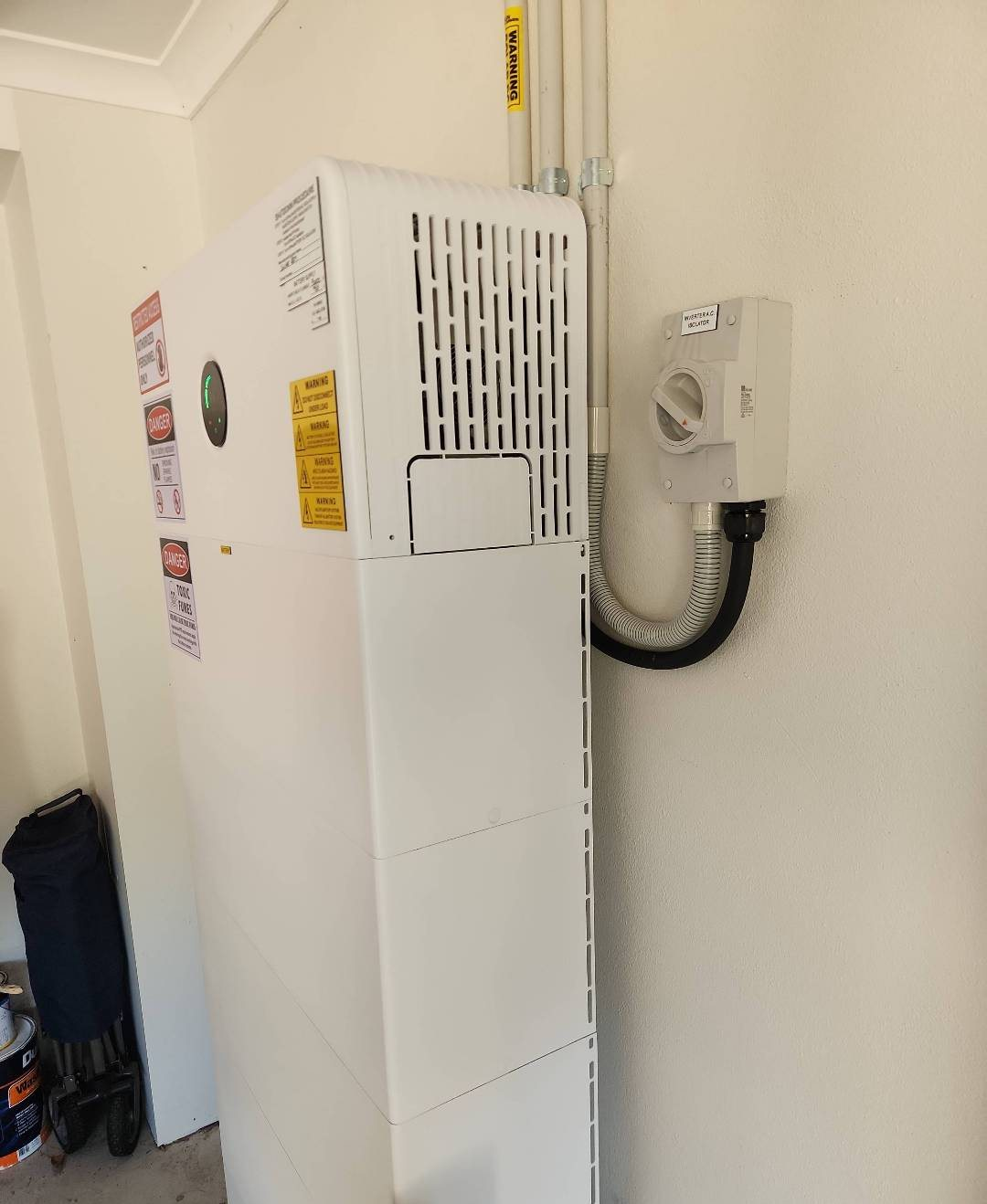
DC and AC cables are sized to the standard and run in conduit back to the switchboard, with separate isolators so each part of the system can be switched off safely.
Switchboard work (power off)
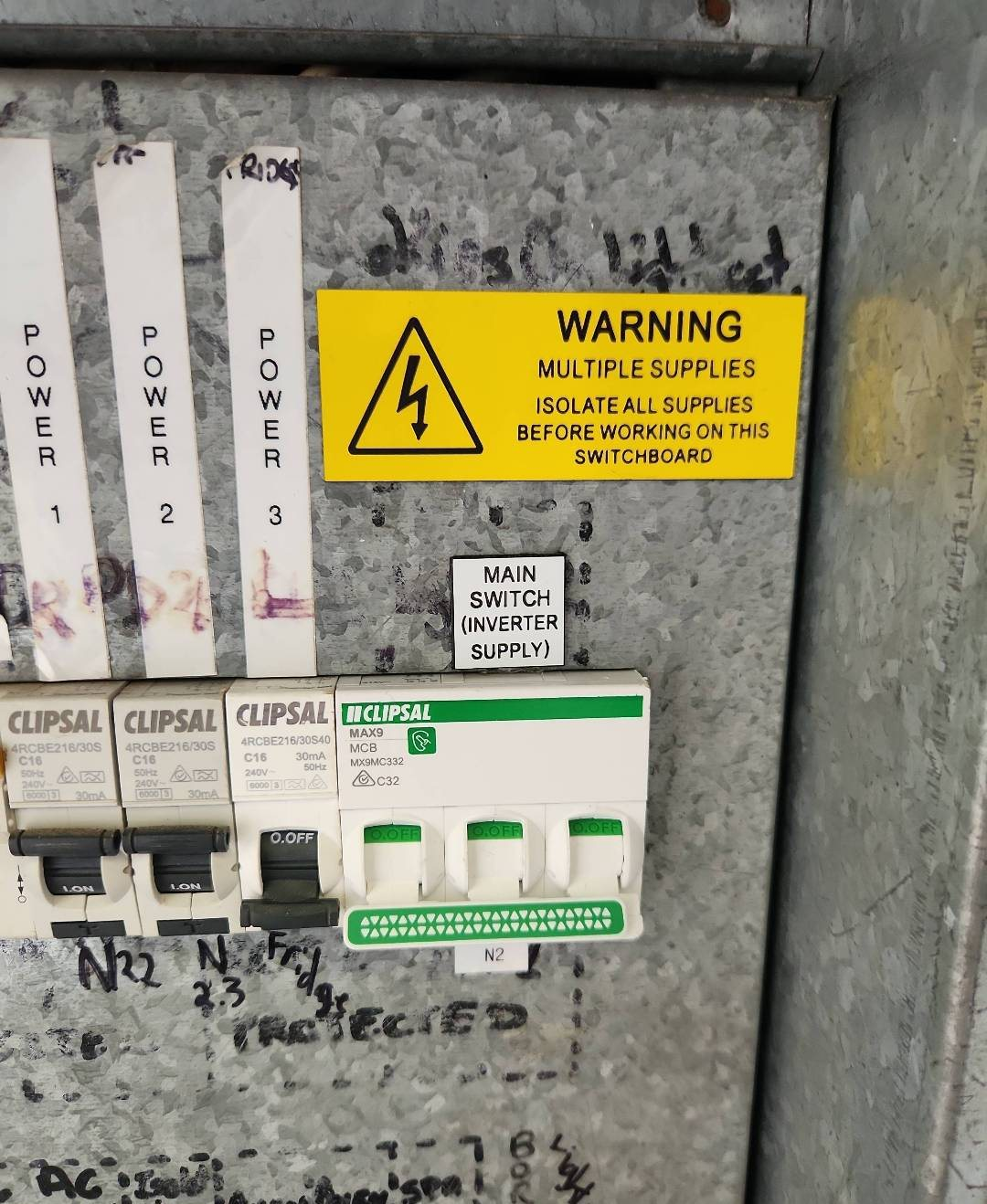
We turn your main switch off, fit the new circuit breaker for the inverter supply and any backup circuits, then label everything.
CT clamp or smart meter
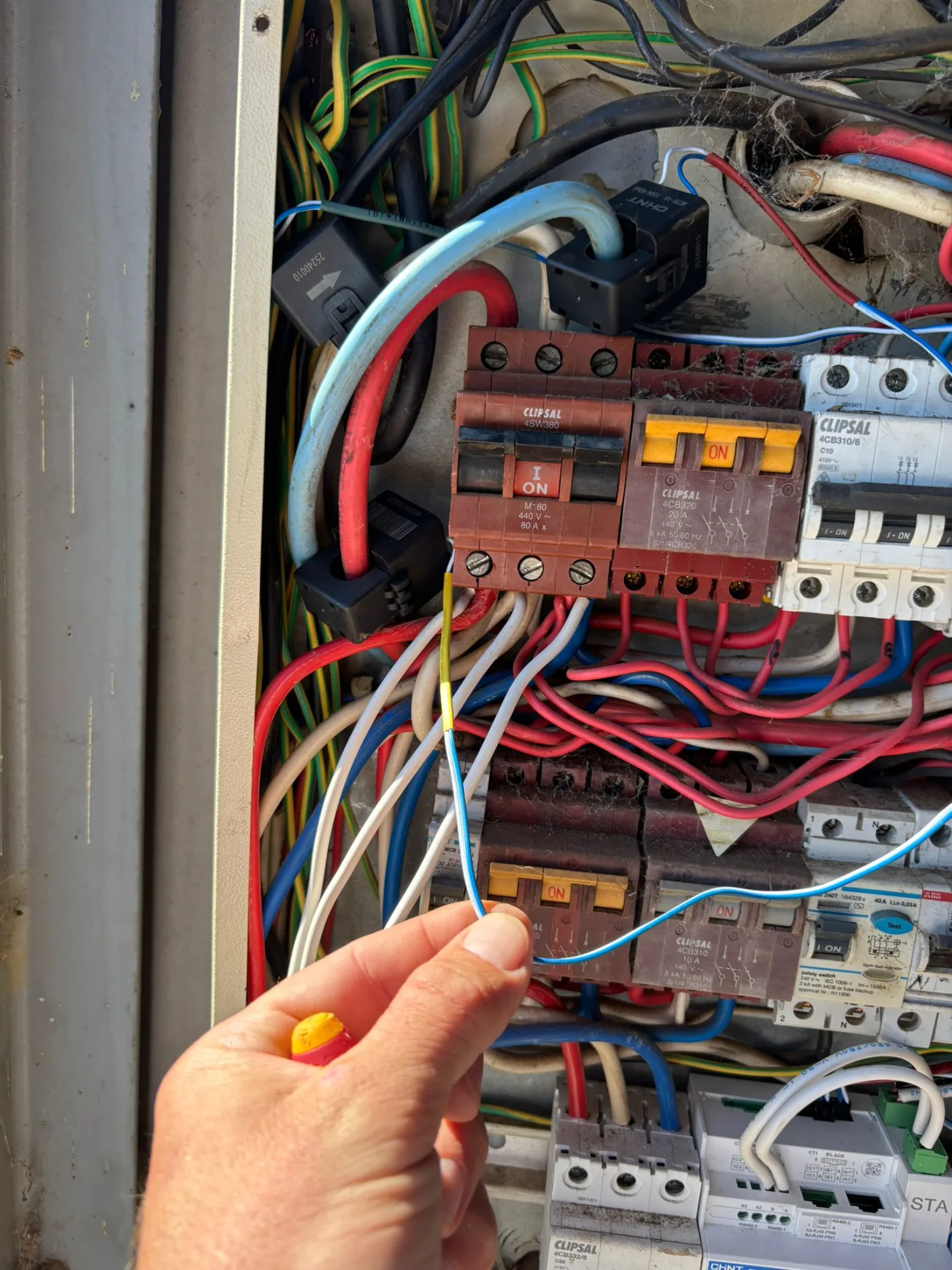
We fit a CT clamp (or a smart meter) on the incoming mains so the system can see what your home is importing and exporting.
Signs, labels and bollard
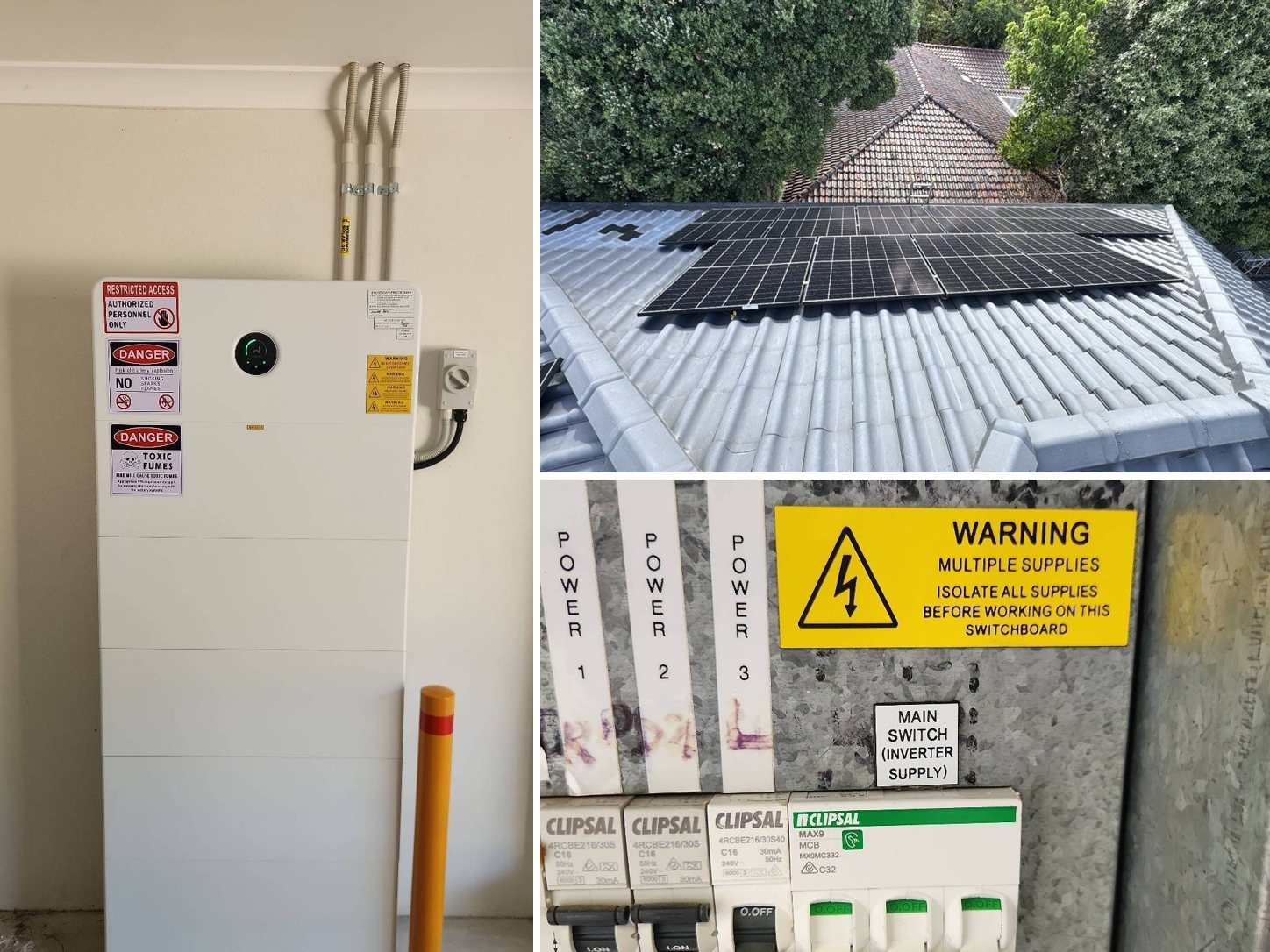
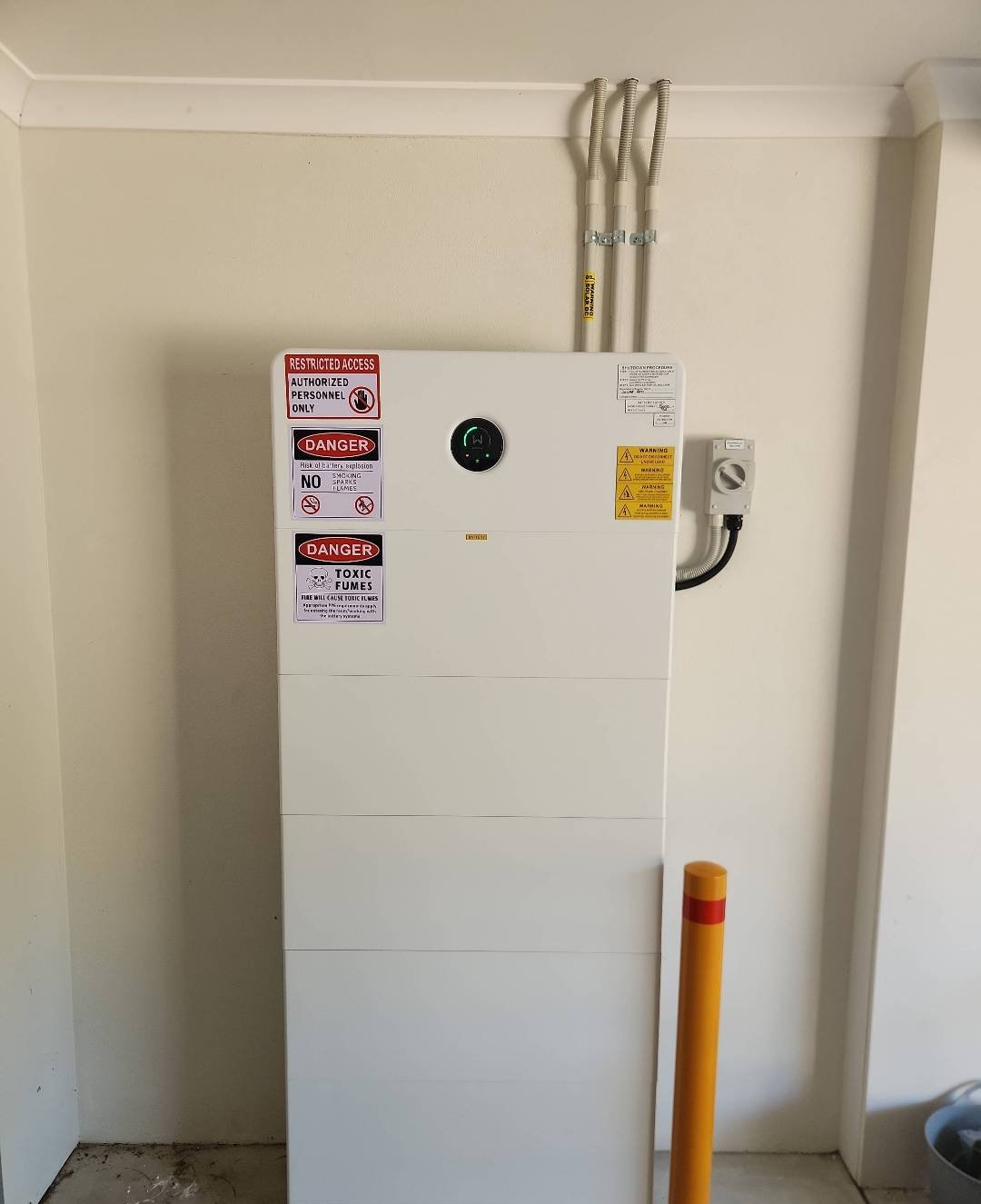
Shutdown procedure, battery hazard signs and “multiple supplies” warnings go on, and a bollard goes in front if a car could reach the battery.
Testing and switch-on
We test the installation, turn the power back on, commission the system and check it’s charging and discharging the right way.
Why the power goes off for a while
To connect the battery into your switchboard, our electrician turns the main switch off and isolates the supply. We work on your switchboard “dead”, not live, because it’s the safe way to do it. Any testing that has to be done on or near live parts follows WA’s code of practice.
If your solar is staying, we also shut it down properly at its isolators, because a solar system is a second source of power in your switchboard.
How the CT clamp works
A CT (current transformer) clamp is a small sensor that clips around a cable without cutting it. We fit it on the incoming mains, just after the Western Power meter, and it measures how much power is flowing in from the grid or out to it. Some systems use a small smart meter in the switchboard instead, wired to the inverter with a data cable.
Why it matters
The inverter uses that reading to decide what to do: charge from spare solar, discharge to cover your home, or hold. Without it, the battery is guessing.
Placement and direction
It has to sit on the right cable, before the house loads branch off, facing the right way. A CT on the wrong cable or facing backwards can make the battery charge from the grid or export when it shouldn’t.
Three-phase homes
On three phase, each phase is measured, either with a CT on each one or with a three-phase meter. GoodWe’s GM330 is one example of a three-phase smart meter.
When the meter box is far away
If the meter, switchboard and battery are in different buildings or a long way apart, we may use a wireless meter link so the reading still reaches the inverter.
What our installers use
Standards and rules we follow
Almost all battery installation work is electrical work, so it has to be done by licensed electricians. These are the main rules that apply to every Perth install.
| Rule | What it covers |
|---|---|
| AS/NZS 3000 (Wiring Rules) | All electrical work in the home |
| AS/NZS 5139 (incl. Amendment 1) | Battery location, clearances, protection, signs |
| AS/NZS 4777.1 | Installing grid-connected inverters |
| AS/NZS 4777.2 | Inverter grid settings, including “Australia Region B” |
| AS/NZS 3008.1.1:2025 | Choosing the right cable sizes |
| WA Electrical Requirements (WAER) | WA’s minimum rules for all electrical installations |
| Western Power technical requirements | Inverter size, generation and export limits for your connection |
| Synergy and Energy Policy WA requirements | Remote management (CSIP-AUS) for new or upgraded systems from 1 May 2026 |
| Manufacturer instructions | Each brand’s Australian install manual and warranty conditions |
Testing and commissioning
A battery isn’t finished when it’s on the wall. It’s finished when it has been tested. For battery inverters with backup, WA’s regulator expects the testing to include backup mode. That covers checking neutral continuity, checking there’s no unintended extra earth-neutral connection, and testing the RCDs with an instrument while the system is on backup.
Grid settings
The inverter is set to AS/NZS 4777.2 “Australia Region B” and the export limit approved for your home.
Remote management (CSIP-AUS)
For Synergy customers, we commission the system through Synergy’s process, including CSIP-AUS communications, so it can join flexible exports or a VPP.
Retailer check
Your retailer or VPP may run a short remote test afterwards to confirm the export limit works.
Backup test
If you have backup, we test the switchover. If the battery needs to charge first, we come back to finish and record that test.
Internet matters here. To join a VPP or an export product, your system needs a stable connection. Without one, it’s set to the fixed 1.5 kW export limit.
Paperwork you should get
Real Solar Red installs
A few recent jobs from around Perth.
Frequently asked questions
- How long does a battery installation take in Perth?
- Most home installs take one day on site. Approvals take longer: Western Power says most battery applications get preliminary approval within 15 business days, and Synergy says the whole process can take up to three months from accepting a quote.
- Will my power be off during the install?
- Yes, for part of the day. Our electrician turns the main switch off to work safely in your switchboard. We tell you before it goes off and roughly how long it will be.
- Can I add a battery to my existing solar?
- Usually, yes. Adding a battery counts as an upgrade, so the system has to meet the current Western Power and WA requirements, and older inverters may need a gateway or a hybrid inverter replacement.
- Do I need internet for my battery?
- To join a VPP or an export product, yes, you need a stable connection. Without one, the system is set to a fixed 1.5 kW export limit. The WA rebate also requires joining a VPP.
- Do I need a bollard?
- Only if a car could reach the battery. The standard says a battery mustn’t go where a vehicle could damage it, so in garages and carports we fit a steel bollard or choose a spot the car can’t reach.
- What is a CT clamp and why does it matter?
- It’s a sensor on your incoming mains that tells the inverter whether your home is importing or exporting. If it’s on the wrong cable or facing the wrong way, the battery can charge from the grid or discharge at the wrong time.
- Who can install a battery in WA?
- A licensed electrical contractor, using licensed electricians. For WA Residential Battery Scheme jobs, installers must also hold SAA Grid Connected Battery Systems accreditation.
Ready for a battery done properly?
We take pride in every install. Send us photos of your meter box and the wall you have in mind, and we’ll tell you what fits before you commit to anything. Local Perth electricians, SAA battery accredited and Plenti-approved for the WA rebate and interest-free loan.
Call 1800 449 733Get a free quoteKeep reading
More Perth battery guides
See every guide in one place: Perth solar battery guides.
Sources: Western Power, Basic Embedded Generator Connection Technical Requirements and connection FAQs; Energy Policy WA, Requirements for solar and batteries (from 1 May 2026); Building and Energy WA, notification and certification of electrical work, battery guidance and the AS/NZS 5139 Amd 1 announcement; Synergy, Getting connected to the grid; WA Residential Battery Scheme requirements; GoodWe ET G2 and Lynx D G2 datasheets (AU); AS/NZS 5139:2019 Amd 1:2025.
More guides
 Batteries 18 kW solar system in Perth: panels, output and who it suits
18 kW solar system in Perth: number of panels, daily output by season, roof space, WA connection rules, battery pairing…
 Batteries 10 kW solar system in Perth: panels, output and who it suits
10 kW solar system in Perth: number of panels, daily output by season, roof space, WA connection rules, battery pairing…
 Batteries Perth solar battery guides: every question answered in one place
All Solar Red guides for Perth solar and batteries in one place: rebates, choosing a battery, installation, Synergy plans, safety…